Your personal search profile
Receive the real estate offers you are looking for before they are even on the market.

Rent out

Date
24.2.2026
Share
Perhaps this thought has already occurred to you: What suits my life now? Do I need to reorganize the familiar and make everyday life in my own home easier or continue to run the big family ship, with all the obligations and chores that were once taken for granted? Or is it worth thinking about adaptations or new forms of living that make everyday life easier?
A look at the social Development shows: Around 1.4 million households in Switzerland live in residential property, around 36 percent of all households. Over 730,000 of these are single-family homes. Around 450,000 of these owner-occupied households are occupied by people over the age of 65.
At the same time, the population continues to age. Forecasts show that the proportion of people over 65 will increase significantly in the coming decades. This means that issues relating to housing in old age are also becoming increasingly important.
Many owners know that their home is not built for the elderly. And yet it is difficult to let go. A home means security and familiarity. At the same time, a large house brings with it responsibility. Over the years, Maintenance, energy, gardening and repairs often take more effort than you would like to admit.
Some owners make a conscious decision to stay in their home and simplify. Others feel that a smaller home could bring more freedom, security and ease. Both are right. The decisive factor is not the decision itself, but that it is made in a self-determined way.
Anyone who deals with the topic of living in old age at an early stage creates time and room for maneuver. Time to examine different forms of housing and realistically assess the financial situation. This is because both the sales process and the search for a suitable new living solution often take longer than expected.
What’s more, even without Imputed rental value, a house incurs running costs. Maintenance, insurance and energy put a strain on liquidity. It is also not uncommon for a large proportion of assets to be tied up in the house, which can become a challenge in the event of unexpected expenses, for example in the event of care. If necessary renovations are postponed, the building fabric loses value over the years, and moving home at a later date becomes increasingly stressful.
Anyone considering a sale should prepare it carefully. Timing is particularly important. The sale of the house and moving into a new home rarely take place at exactly the same time. Questions relating to mortgages, transition phases or alternative forms of housing also deserve attention at an early stage.
Sometimes it is also worth considering rental solutions. They offer flexibility and allow you to try out new living situations without having to commit immediately if a place or form of housing doesn’t turn out to be suitable after all.
We will be happy to advise you on your living situation.

NZZ Residence, October 26: Interview with Claude Ginesta: “To me, providers of fixed-price models aren’t real Real estate agents”
Reading time: 8 min
World Habitat Day
Reading time: 5 min
Event: Real estate Gains Tax on the Sales of a Multi-Family Home
Reading time: 1 min
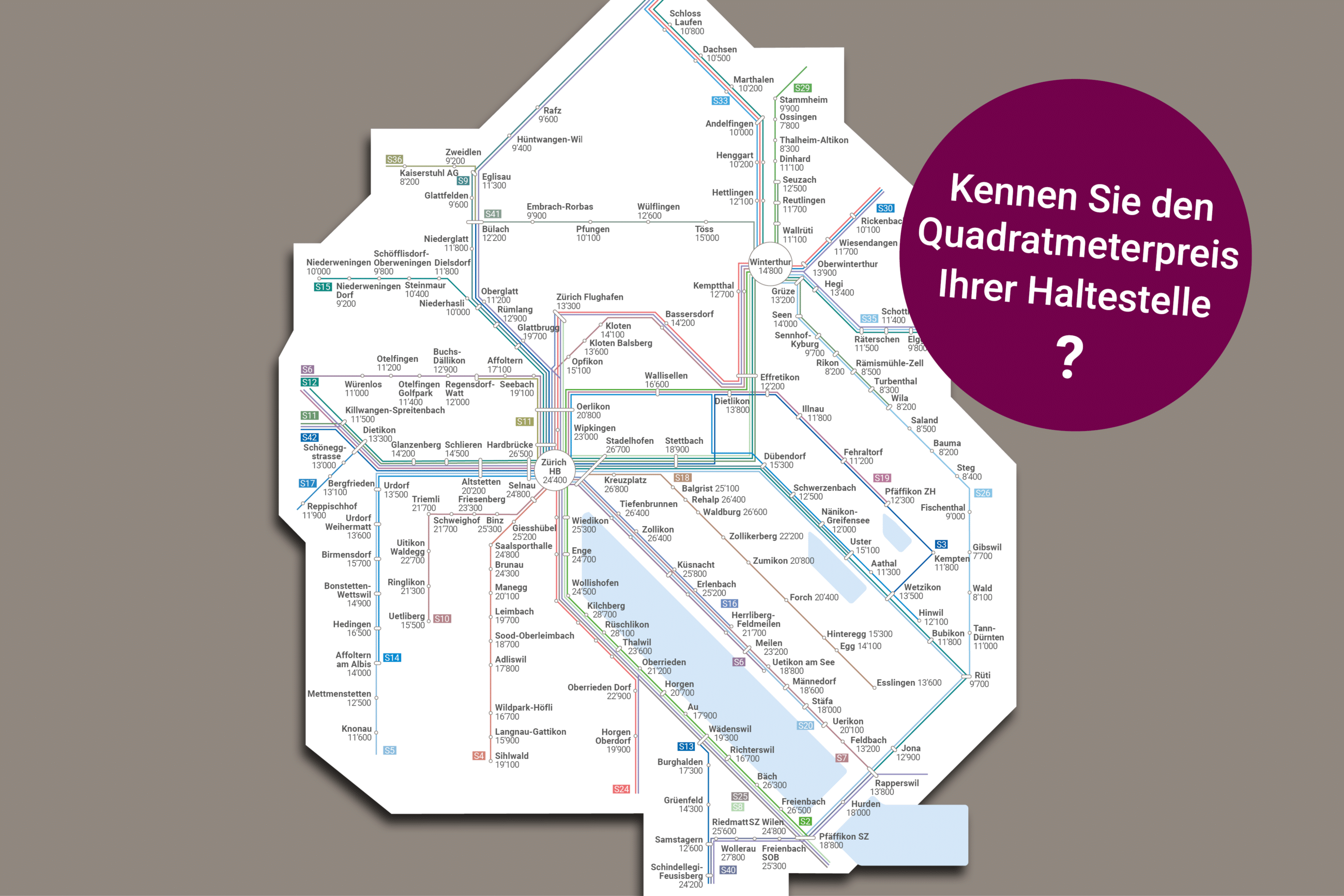
The real estate market is riding the S-Bahn
Reading time: 2 min