Your personal search profile
Receive the real estate offers you are looking for before they are even on the market.

Rent out

Date
24.6.2026
Share
Are you planning to buy your first home? If so, you’re probably looking into topics like down payment, mortgages, and appointments with a notary. However, when it comes to Financing or your first meeting with tax experts, terms will inevitably come up that unsettle many prospective buyers: property tax, imputed rental value, wealth tax, or capital gains tax.
In this guide, we explain the most important tax terms related to homeownership in a simple and easy-to-understand way—so you can approach your first Real estate purchase with confidence.
Many people fear that buying a Property will subject them to numerous new taxes. In fact, the Swiss tax system surrounding home ownership is more straightforward than it initially appears. Most tax concepts relate to different stages of life: the purchase, ownership, or eventual Sales of a property.
If you know the key terms, you can avoid financial surprises and better estimate your long-term costs.
People who search the Internet for the term “Property tax” often mean, in a general sense, taxes related to home ownership. In fact, however, it is a specific tax that is not levied everywhere in Switzerland. Only the following cantons currently levy a property tax or a comparable tax on real estate ownership: Bern, Fribourg, Lucerne, Appenzell Innerrhoden, St. Gallen, Graubünden, Thurgau, Ticino, Vaud, Valais, Neuchâtel, Geneva, and Jura. Different regulations may apply depending on the canton and municipality. In practice, other types of taxes are significantly more relevant for most homeowners. These include, in particular, the imputed rental value, the wealth tax, and the Real estate gains tax.
Anyone who owns a home today in a canton without a property tax should closely follow political developments. With the elimination of the Imputed rental value, cantons with many second homes in particular could introduce new property taxes to compensate for the loss of tax revenue. What may appear at first glance to be a tax break could thus be offset elsewhere.
The imputed rental value is a frequent topic of discussion. The reasoning behind this is that homeowners who live in their own house or apartment have a financial advantage over landlords, who must pay taxes on their Rental income.
For this reason, a notional rental income is taxed as income. This amount is determined by the tax authorities and is generally 60–70 percent of the actual Market rent that could be earned.
For many first-time homebuyers, the imputed rental value comes as a surprise at first. At the same time, homeowners can deduct various expenses from their taxes, such as Mortgage interest or maintenance costs aimed at preserving the property’s value.
Real estate is considered an asset and must be reported accordingly on your tax return.
This calculation is based not on the Current market value, but on an official assessed value. This is usually 60–70 percent of the sales price; however, for older properties, the assessed value is significantly lower. Homeowners can save on taxes here, as they do not have to pay capital gains tax on approximately 30–40 percent of the property’s value.
Purchasing an apartment or a house changes the composition of one’s assets. Since real estate is generally taxed at less than its Market value and mortgage debt can be deducted from one’s assets, the wealth tax may be reduced depending on the financing situation.
This point is often underestimated by first-time homebuyers. Homeowners can claim various expenses as tax deductions. These include, among other things:
In many cases, energy-efficient renovations are also eligible for tax breaks. These may include, for example, replacing a heating system, improving thermal insulation, or installing a solar power system.
It is therefore worth keeping receipts carefully for 30–40 years and discussing major investments with a tax Advisor early on.
When purchasing a property, in addition to the purchase price, there are various fees and incidental costs that buyers should factor into their financial planning early on. These include, in particular:
Real estate transfer tax is levied when a property or parcel of land changes hands. It is generally calculated as a percentage of the purchase price or the official Market Value and is payable once at the time of the transfer of ownership.
Whether this tax is levied—and at what rate—depends on the specific canton. While some cantons do not have a real estate transfer tax, in others it is paid by the buyer alone or jointly by the buyer and seller. Depending on the location, this can result in additional costs of several thousand francs.
In addition to the purchase costs, it’s also worth keeping an eye on your future tax situation. Value-enhancing investments—such as a sunroom, an attic conversion, or a high-quality kitchen Renovation—can generally be deducted from the taxable capital gain upon future Sales. Therefore, it is advisable to carefully keep all relevant invoices and receipts. Doing so can often significantly reduce the tax implications of future Sales.
Buying your first home is one of the biggest financial decisions you’ll ever make. That makes it all the more important to understand the key tax implications.
Imputed Rent, wealth tax, capital gains tax on real estate, or property tax may seem complicated at first glance. However, if you know when each tax applies, you can better assess the financial implications and make informed decisions.

Professional advice can help you assess your individual situation and build a solid foundation for your dream of homeownership. Sign up for a free initial consultation—we look forward to hearing from you.
When is property gains tax due?
Real estate gains tax is only due upon the sale of a property, provided that a gain is realized. The amount of the tax depends, among other things, on the gain realized, the holding period, and cantonal regulations.
As a homeowner, what expenses can I deduct from my taxes?
Mortgage interest, Maintenance work intended to preserve property value, and renovations intended to preserve property value may be claimed as tax deductions. Energy-efficiency renovations are also frequently eligible for tax benefits. The deductions available depend on cantonal regulations.
As a property owner, do I have to pay property tax every year?
That depends on the specific canton and, in some cases, on the municipality. While some cantons levy a Property tax, others do not have such a tax. Regardless, however, property owners are generally required to include the imputed rental value (through 2028) and the assessed value of their property in their tax return.
Why is early advice on taxes and financing useful?
Professional advice makes it possible to examine tax implications at an early stage and prepare financial decisions in the best possible way. This makes it easier to plan for possible tax consequences, Mortgage issues and investment decisions.
What additional costs are involved in the sale?
In addition to possible taxes, other costs may arise when selling, such as for the notary’s office, Land register, marketing or the early termination of a mortgage. Early planning helps to realistically estimate these costs.
What happens to the existing mortgage when I sell?
When a Property is sold, the existing mortgage is usually repaid with the proceeds of the sale. If the mortgage still has a fixed term, a prepayment penalty may be incurred under certain circumstances.
Can property gains tax be deferred?
In certain cases, tax deferral is possible, for example if the sale proceeds are reinvested in an owner-occupied replacement Property. In this case, the tax is not due immediately, but is transferred to the subsequent sale of the new property.
What is property gains tax?
Property gains tax is levied on the profit made on the sale of a property. It is calculated as the difference between the original purchase price and the sale price, less certain investments or value-enhancing renovations. The amount of the tax depends on the canton and the length of ownership.

NZZ Residence, October 26: Interview with Claude Ginesta: “To me, providers of fixed-price models aren’t real Real estate agents”
Reading time: 8 min

World Habitat Day
Reading time: 5 min
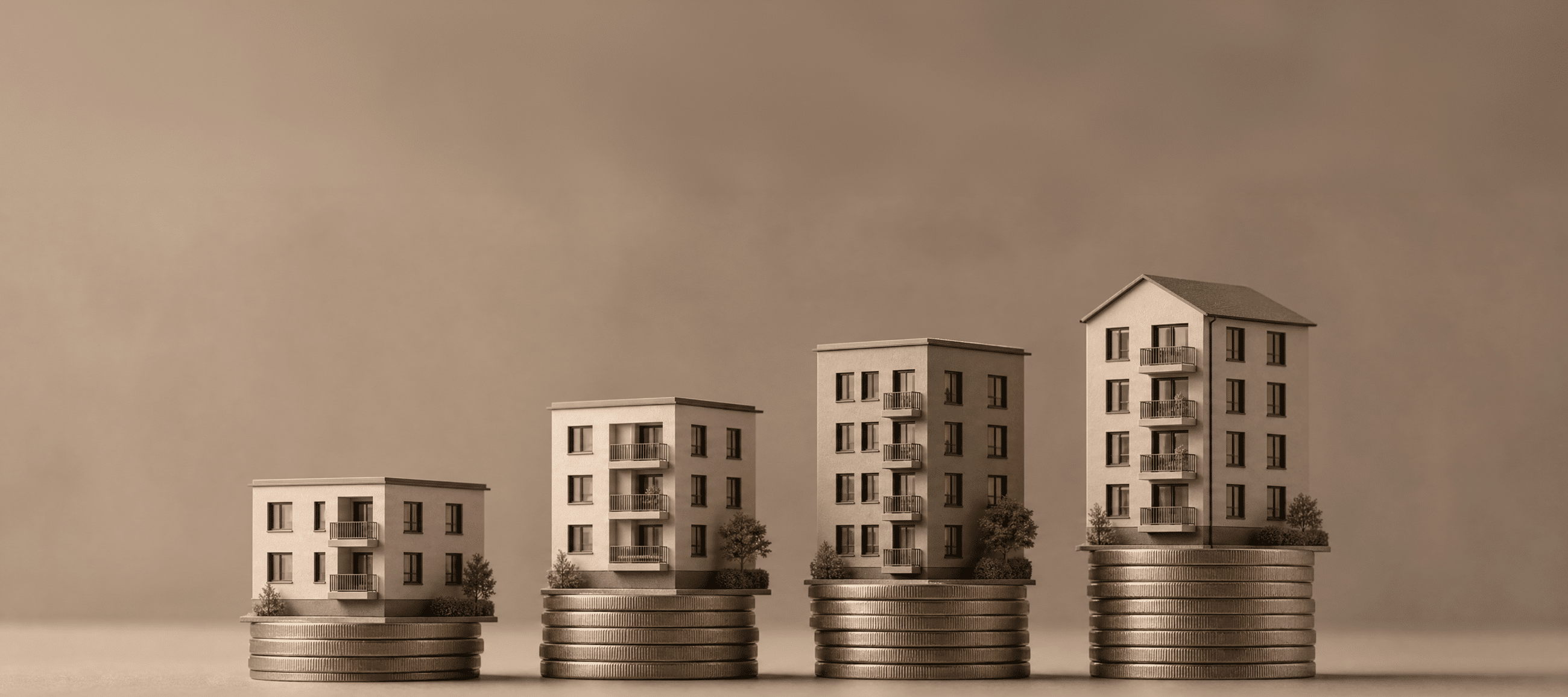
Event: Real estate Gains Tax on the Sales of a Multi-Family Home
Reading time: 1 min
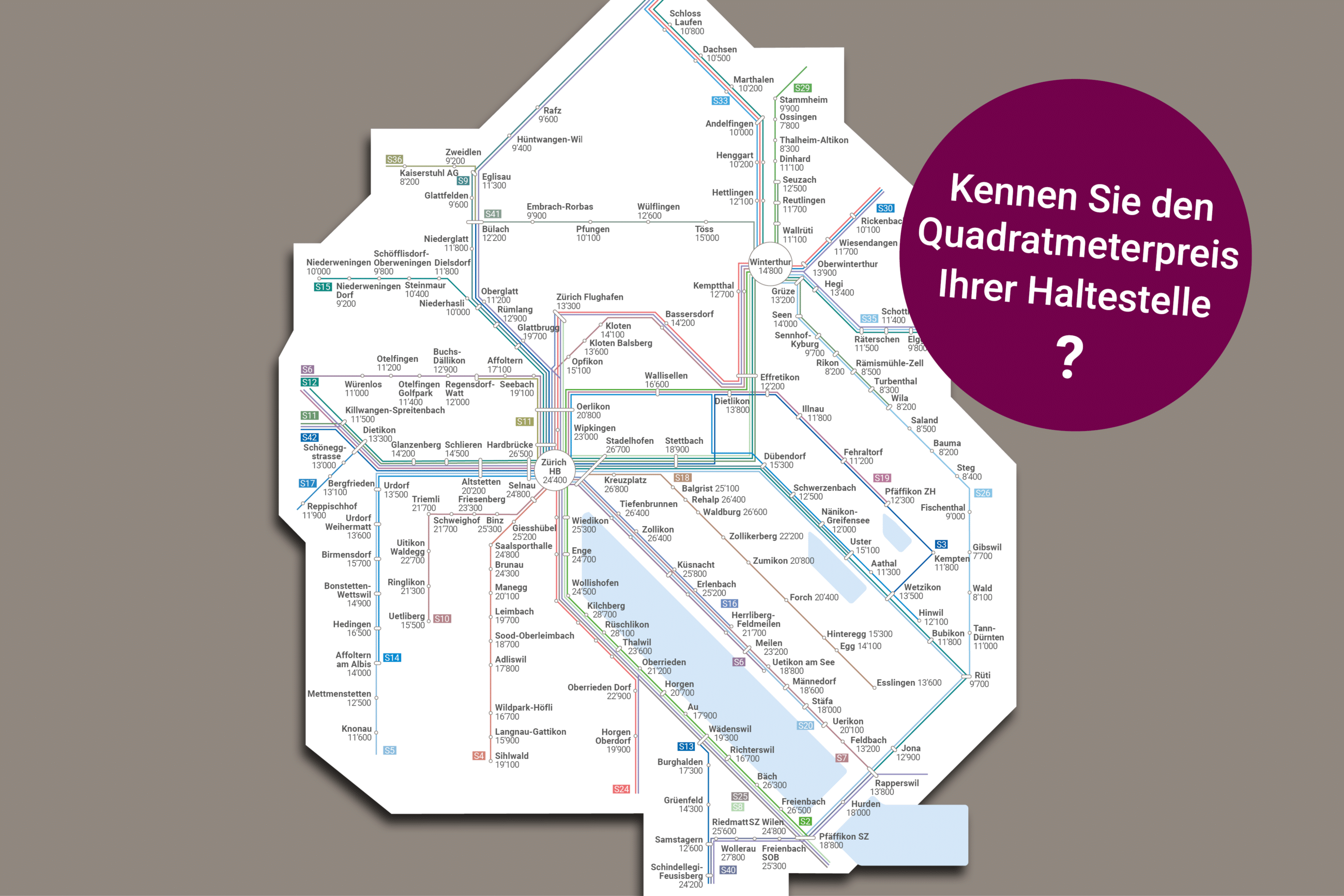
The real estate market is riding the S-Bahn
Reading time: 2 min