Your personal search profile
Receive the real estate offers you are looking for before they are even on the market.

Rent out
Date
29.6.2026
Share
A thorough Real estate analysis provides the necessary transparency. It reveals the breakdown of costs and revenues, whether rental income is in line with market rates, what investments are needed, how the current value can be determined, and what opportunities for optimization exist. In doing so, we do not view a property in isolation, but always consider the interplay of location, condition, use, financing, and return on investment.
Every analysis begins with a careful assessment of the key data points. These include, among other things, the address, location, lot size, Building Volume, year of construction, condition of the property, use, number of units, parking spaces, and existing lease agreements. The ownership structure, the purpose of the investment, and any existing financing are also taken into account.
This information forms the basis for all further steps. A Property in good condition with stable tenancies must be evaluated differently than a property in need of renovation, with vacancies, or with unclear contractual terms. Therefore, this initial phase is not just about collecting data, but about gaining a comprehensive understanding of the property.
Equally important is the assessment of the location. Both the macro and micro locations influence a property’s marketability and value. Factors such as accessibility, the surrounding area, demand, infrastructure, views, environmental impacts, and the location’s Development potential can significantly shape the assessment.
After assessing the initial situation, we analyze the Operating costs. In doing so, we distinguish between costs that can generally be passed on to tenants and costs that remain the responsibility of the property owner.
Depending on the lease agreement and billing system, billable utilities may include, for example, heating and hot water costs, water and sewer charges, common-area electricity, building Maintenance, service fees, or other building-related expenses. In practice, it is often the case that such costs are not passed on in full or are not billed correctly. Reasons for this may include older lease agreements, flat-rate charges, missing billing statements, or unclear agreements.
In addition, non-pass-through operating costs are taken into account. These include, for example, insurance, repairs, administrative costs, vacancies, or extraordinary expenses. To arrive at a realistic assessment, it is important not to consider just a single year. Individual cost items may be skewed by renovations, tenant turnover, or one-time events. Therefore, whenever possible, we analyze data from multiple years to determine a sustainable cost level.
The goal of this cost analysis is to create transparency: What costs occur on a regular basis? Which items are extraordinary? Where is there potential for savings? And which costs could potentially be allocated on a user-pays basis?
Income analysis is a key component of any Real estate appraisal. The focus is on current rental income, the structure of the lease agreements, and the relationship between actual rents and potential market rents.
To this end, a rental index is created or reviewed. Among other things, this index lists the individual units, tenants, lease start dates, net rents, utility costs, floor areas, parking spaces, Rent bases, and previous adjustments. Based on this information, it is possible to assess whether the current income situation is sustainable and in line with market conditions.
A particularly relevant question is whether there is potential for rent increases. This potential can arise from various factors: a change in the Reference Interest Rate, inflation and cost levels, below-average rents for existing units, or higher market rents for new leases and re-leases. At the same time, it is important to note that not all theoretical potential can be realized immediately. Tenancy laws, existing leases, and market conditions set clear parameters.
A thorough analysis of returns therefore shows not only what is possible, but also what is realistic and feasible.
A property must be maintained on an ongoing basis and renovated periodically. That is why we assess whether any short-, medium-, or long-term investments are needed. These include, for example, renovations to the Building envelope, the roof, windows, building systems, kitchens, bathrooms, the surrounding area, or common areas.
We distinguish between value-preserving and value-enhancing measures. Value-preserving investments serve to safeguard the existing property. Value-enhancing investments, on the other hand, can raise the standard, improve rentability, or generate additional income.
For property owners, this distinction is crucial. Not every investment automatically leads to higher value or a better return. That is why we always evaluate planned or necessary measures in relation to their benefits. An investment is particularly attractive if it leads, in the long term, to lower costs, higher Rental income, lower vacancy rates, or a clear increase in market value.
The value of the property is assessed based on income, costs, condition, and market conditions. For income-producing properties, the income approach is often the primary focus. In this approach, the sustainable rental income is valued using an appropriate capitalization rate.
The capitalization rate takes various factors into account: the general interest rate level, real estate-related risks, administrative expenses, Maintenance, vacancy risk, and provisions for future renovations. This rate may vary depending on the location, condition, quality of the property, and market demand.
In addition to the current value, a potential value can also be considered. This indicates how the value might develop if rental income were optimized, operating costs were correctly allocated, or value-enhancing measures were implemented. This reveals whether the property has hidden reserves and which factors have a particularly significant impact on its value.
A transparent valuation is not only relevant for potential Sales. It also serves as the basis for Financing decisions, succession planning, portfolio considerations, and investment decisions.
Financing has a significant impact on cash flow, risk, and Return on equity. That is why we analyze how a property is currently financed and what effects alternative financing options would have.
A low debt-to-Equity ratio provides security and reduces interest rate risks. At the same time, an appropriate use of debt can increase the return on equity. This so-called leverage effect occurs when the property’s total return exceeds the cost of financing.
However, a higher level of debt is not automatically better. It increases dependence on interest rate trends, debt sustainability, and market values. For this reason, different options are evaluated not only from a mathematical perspective but also from a strategic one. It is crucial that the financing structure aligns with the ownership structure, risk tolerance, and investment objective.
A property should not be evaluated solely on the basis of its Market value. Equally important is the question of what ongoing income it generates after deducting all relevant costs. That is why we calculate the net cash flow and use it to derive various return metrics.
In this process, rental income is compared with operating costs. Depending on the analysis, financing costs may also be taken into account. This makes it possible to determine how profitable the property is today and how changes in costs, rents, or financing affect the return on investment.
A comparison between current and potential cash flow is particularly valuable. It highlights the improvements that could be achieved by optimizing costs, correctly allocating operating expenses, adjusting rental income, or reducing vacancies. The return-on-investment analysis thus reveals which measures have the greatest economic impact.
At the end of the analysis, the key findings are summarized. This leads to specific courses of action, which can vary greatly depending on the property.
Typical measures include reviewing lease agreements, implementing or adjusting utility billing, setting market-rate rents for new leases, evaluating investments with clear benefits, reducing unnecessary costs, and adjusting the financing structure.
It is important to prioritize measures. Not everything needs to be implemented immediately. Some steps are urgent because they have direct financial implications. Others make sense in the medium or long term, such as those related to restructuring, strategic issues, or Portfolio decisions.
A professional real estate analysis combines data, market knowledge, and strategic thinking. It shows the current state of a property, the income it generates, the costs involved, its realistic value, and where there is potential for improvement.
The main benefit lies in transparency. Property owners are provided with a clear basis for decision-making and can develop their properties in a targeted manner. Whether they choose to hold, optimize, finance, renovate, or engage in Sales: those who understand the economic dynamics of their property can make well-informed and sustainable decisions.
Are you planning to participate in Sales in the medium term, or would you like to better understand the potential for optimizing your apartment building?
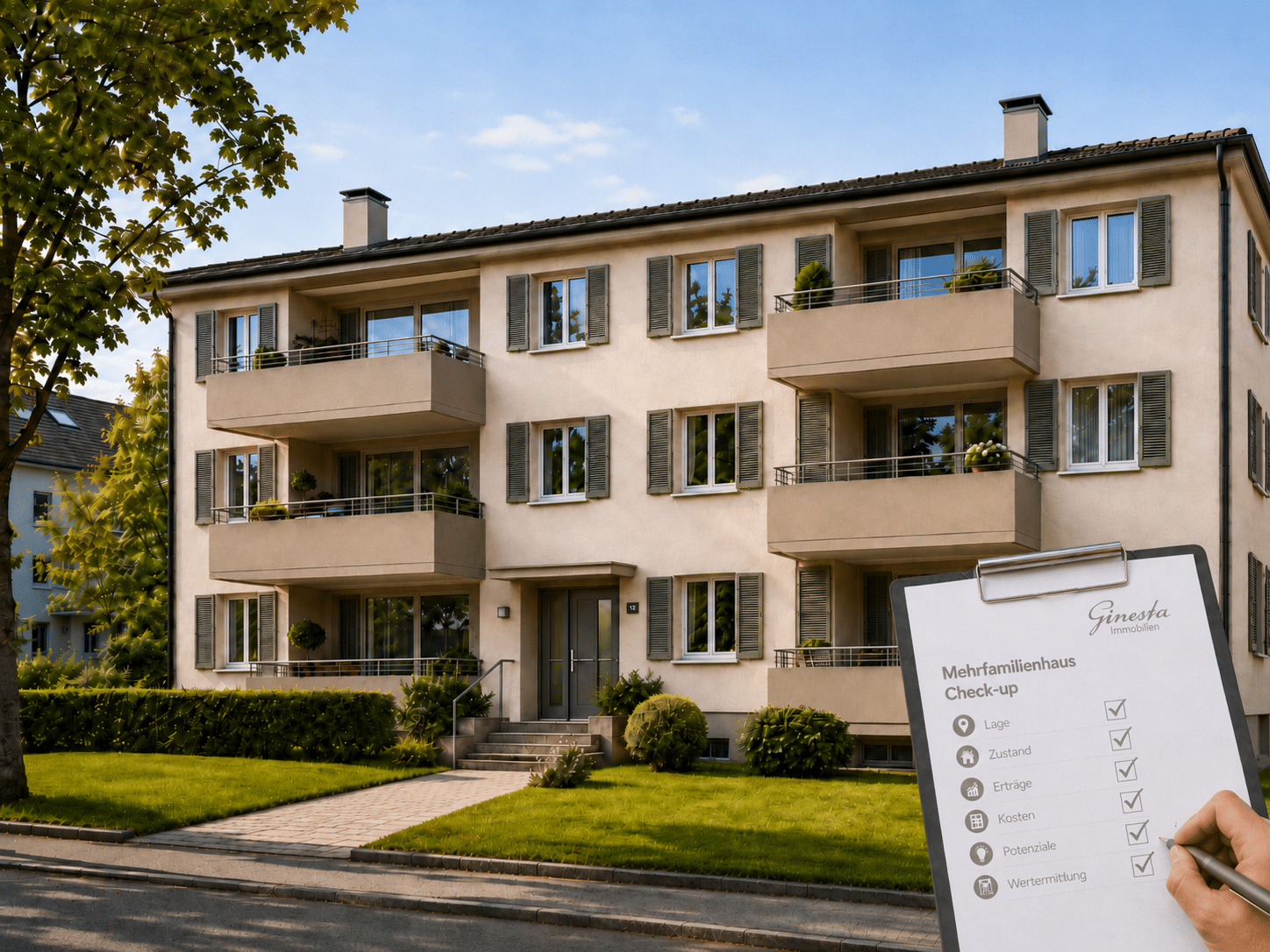
With our multi-family home check-up, you’ll receive a concise assessment of your property’s current condition, value, and potential. Among other things, we analyze costs, rental income, planned investments, Market Value, financing structure, and potential returns and optimization opportunities. This provides you with a solid basis for making informed decisions regarding the further development, management, or strategic direction of your property.

Our expertise in this area guarantees a thorough analysis of your property, from identifying opportunities for optimization to providing an initial technical assessment.

NZZ Residence, October 26: Interview with Claude Ginesta: “To me, providers of fixed-price models aren’t real Real estate agents”
Reading time: 8 min

World Habitat Day
Reading time: 5 min
Event: Real estate Gains Tax on the Sales of a Multi-Family Home
Reading time: 1 min
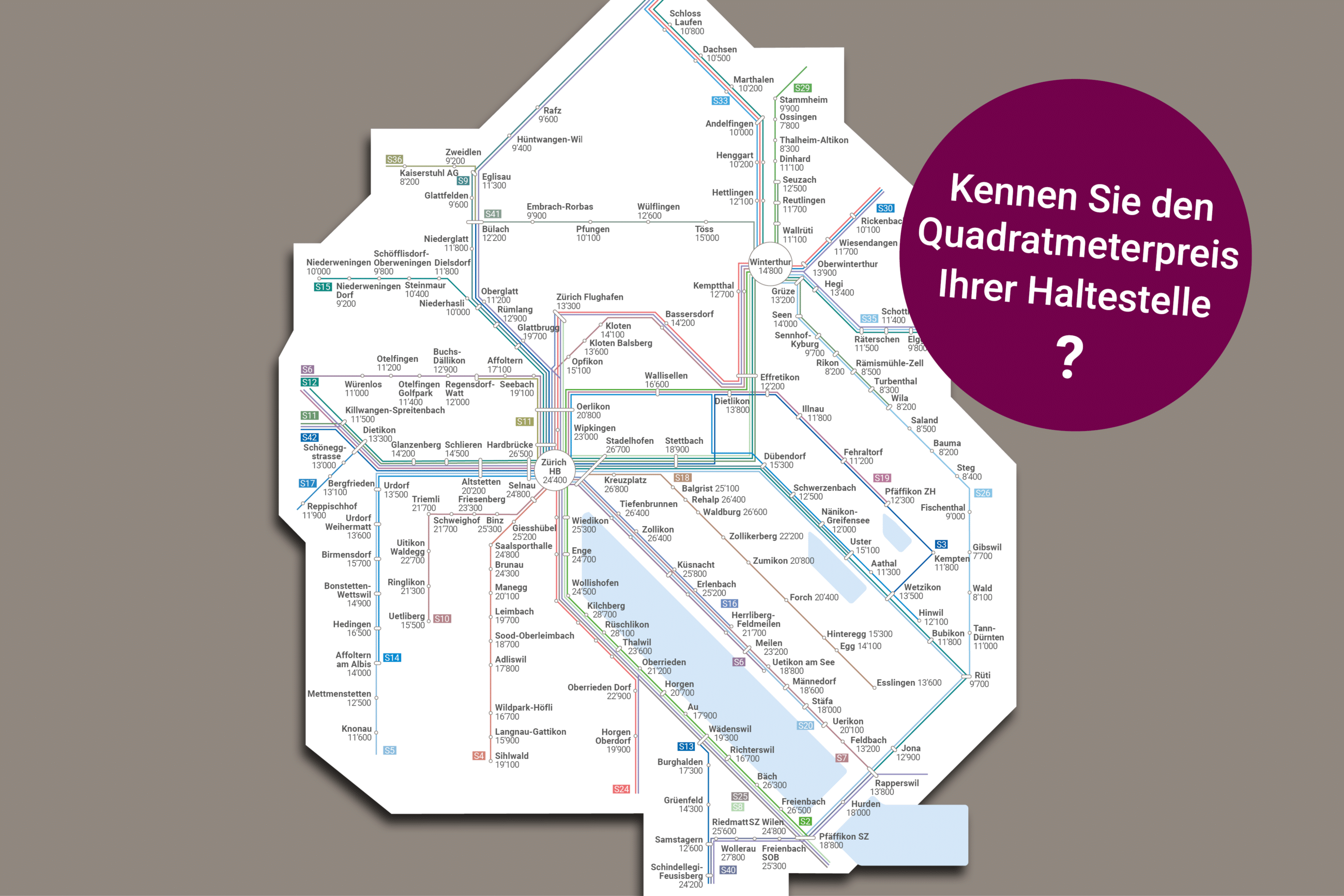
The real estate market is riding the S-Bahn
Reading time: 2 min