Your personal search profile
Receive the real estate offers you are looking for before they are even on the market.

Rent out

Date
1.6.2017
Share
Anyone who cancels their Fixed-rate mortgage before the deadline often has to pay the lending bank steep sums. In two new leading rulings, the Federal Supreme Court has now clarified the effects that such payments – known as early repayment penalties – can have on property gains tax and income tax. It thus establishes guidelines for the cantons and ensures a certain degree of standardization of the different cantonal regulations.
Specifically, a case from the canton of Zurich had to be assessed. The owners sold a commercial building there and redeemed the mortgages on it prematurely in return for a prepayment penalty of a good CHF 2.5 million. They then wanted to deduct the payment made from their Property gains tax, but were denied this by the Zurich tax commission, the cantonal tax office and the administrative court.
The Federal Supreme Court disagrees and upholds the sellers’ appeal. While the Federal Tax Harmonization Act grants the cantons considerable discretion in taxing Real estate gains, it also requires a uniform definition of certain terms. According to the Federal Supreme Court, an early repayment penalty always falls under the legal definition of (deductible) “investment costs” and must be deducted from the capital gains for real estate tax purposes if the cancellation of the mortgage is inextricably linked to the Sales of the property. In the present case, this is the situation: The mortgage was permanently discharged immediately prior to the sale of the property and was not replaced by a new mortgage.
Precisely the opposite conditions apply for a deduction from income tax, as the Federal Supreme Court stated in a Neuchâtel case. Here too, the Mortgage was terminated early before the apartment was sold and a prepayment penalty of a good CHF 44,000 was paid. The sellers wanted to deduct this payment from their income tax as debt interest, which the Neuchâtel tax authorities rejected. That was correct, says the Federal Supreme Court. Prepayment penalties could only be equated with debt interest and claimed for income tax purposes if the terminated mortgage was replaced by another with the same lender. So if you want to replace your fixed-rate mortgage with a cheaper one with a lower interest rate or switch to a different financing model and conclude the new contract with the same bank, you can deduct the compensation payment from your income. This was not the case here, which is why a deduction from income tax is not possible, says the Federal Supreme Court. (The question of whether the Neuchâtel sellers could have deducted the compensation payment from their property gains tax was not the subject of the proceedings).
At the same time, the Federal Supreme Court states that a deduction of early repayment compensation is excluded for both property gains tax and income tax purposes. Expenses that have already been taken into account for one tax cannot be deducted again for the other.
The two BGE publications
Judgment from Neuchatel
Judgment from Zurich
Katharina Fontana, NZZ from 28.4.2017

NZZ Residence, October 26: Interview with Claude Ginesta: “To me, providers of fixed-price models aren’t real Real estate agents”
Reading time: 8 min

World Habitat Day
Reading time: 5 min
Event: Real estate Gains Tax on the Sales of a Multi-Family Home
Reading time: 1 min
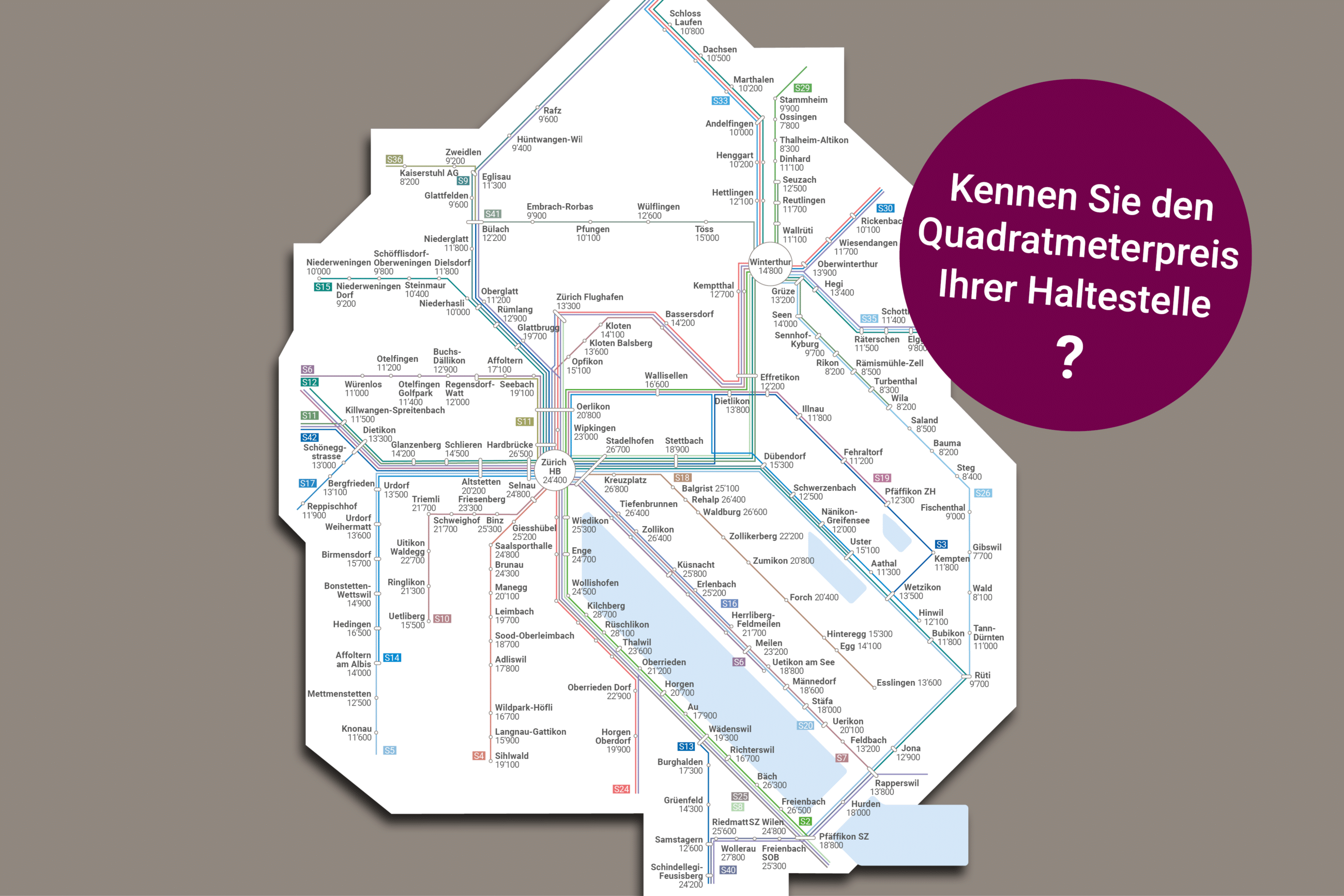
The real estate market is riding the S-Bahn
Reading time: 2 min