Your personal search profile
Receive the real estate offers you are looking for before they are even on the market.

Rent out
Date
5.10.2026
Share
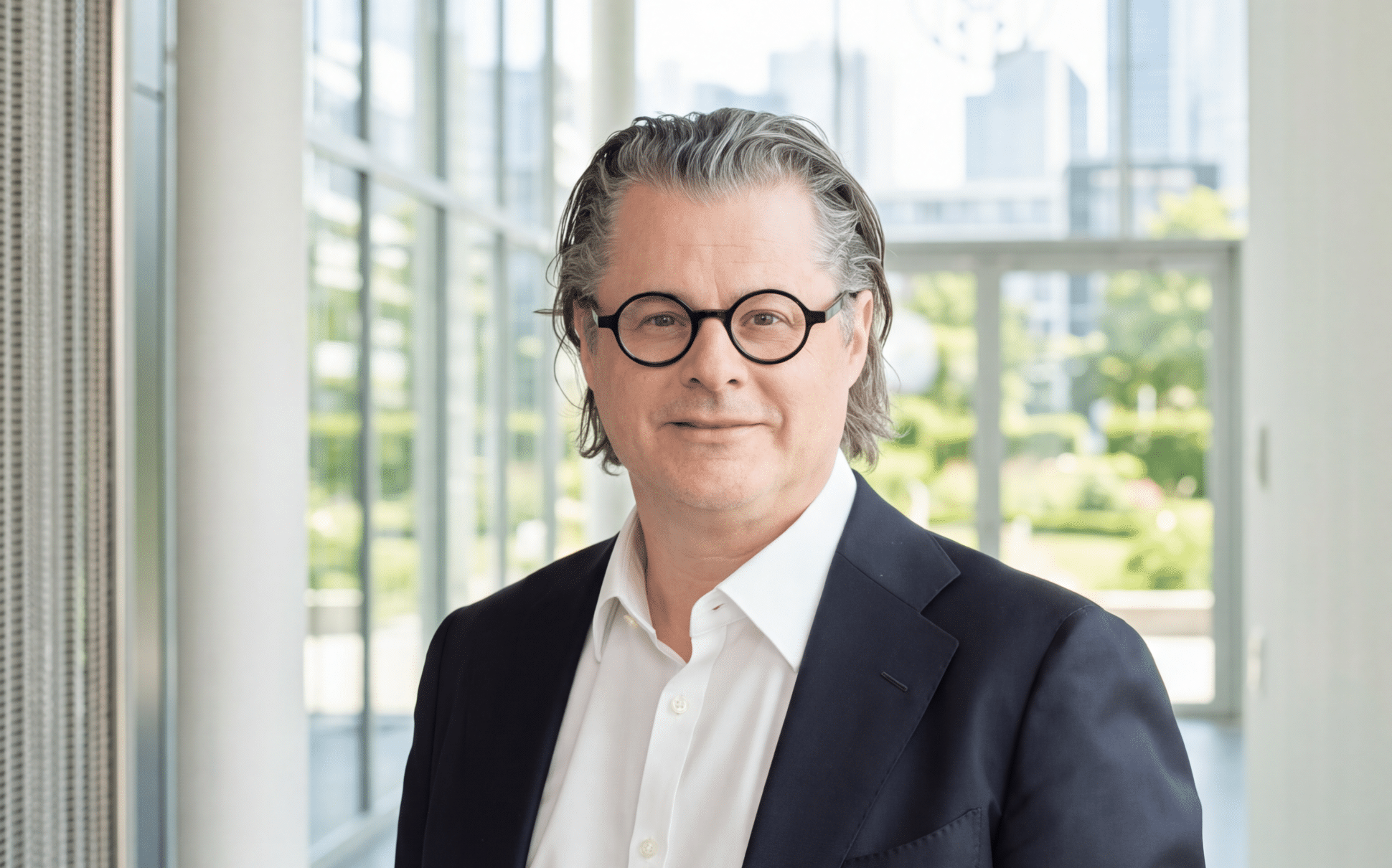
Residence: Mr. Ginesta, you run a family business steeped in tradition. How does your philosophy differ from the dynamics of the modern financial world?
Claude Ginesta: It’s incredibly valuable that in a family-owned business, we don’t face the constant pressure that prevails in the financial world. We run the company with a lean management team, which allows us to maintain extremely fast decision-making processes. Publicly traded companies have to justify their Sales and earnings anew every Quarter. That’s not the case for us. This gives us stability and peace of mind.
What is the most valuable piece of advice you received from your father or your family?
That is clearly our value system. It’s about the attitude with which we treat our employees and interact with our customers. I personally welcome every new employee on their first day. Our motto is: The customer is king; we always treat them—and all employees—with the same deep respect and foster a culture of open feedback.
In addition to construction technology, new business models are also changing the market—such as fixed-price providers like Neho. How do you view these developments?
In my view, providers of fixed-price models are not true Real estate agents in the traditional sense. In the past, private sellers handled the sales of their properties entirely on their own. Today, they turn to such service providers for marketing services to prepare documentation and promote their properties. However, this is a far cry from the role of a professional real estate agent, who manages the entire transaction on behalf of the client.
You initiated the founding of Next Property AG in 2017. What prompted you to do so, and what did you hope to achieve?
Even back then, I was concerned about the Real estate industry’s growing dependence on a handful of large online platforms. Together with a competitor, we therefore came up with the idea of pooling the industry’s resources and building an independent alternative. What started with about 20 companies has grown to include over 530 real estate firms from German-speaking Switzerland. To this day, our goal remains to strengthen the independence and freedom of choice within the real estate industry.
As Chairman of the Board of Directors at Next Property, you have therefore been a vocal advocate for greater competition in the Swiss real estate platform market for years. Why are you so personally committed to this cause?
Because this raises a fundamental question: To what extent do we, as independent real estate agents, want to be dependent on individual market-dominating platforms? I have chaired the Board of Directors of Next Property since 2022, and in this capacity I also speak publicly about the Development of the platform market. This has garnered a lot of support within the industry, but has also sparked strong reactions. For me, one thing remains clear: competition and freedom of choice are essential for a functioning real estate industry.
In international comparisons, one often hears that Switzerland is losing its appeal to high-net-worth individuals. Is that true?
Cantons such as Zurich have abolished certain flat-rate tax schemes, while other cantons have raised their minimum thresholds. Today, taxpayers often have to pay between half a million and one million francs in taxes to qualify for the flat-rate scheme. This has led to global tax competition: Portugal enticed investors with the Golden Visa, while Italy initially required
100,000, then 200,000, and now sets a flat rate of 300,000 euros. Nevertheless, in the cantons that still offer lump-sum taxation, we continue to have very wealthy and influential individuals. Switzerland’s quality of life and stability remain arguments of enormous weight.
Where would you personally invest if you could put your funds into a private project in Switzerland?
Personally, I wouldn’t buy a development project; instead, I’d buy a property for my own use: a nice apartment or a small house in the Upper Engadine. I find this region incredibly beautiful for vacation getaways.
You work closely with the international real estate network Knight Frank. What is the strategic thinking behind this?
Brand presence is particularly crucial in the ultra-high-net-worth segment because clients must be targeted on an international scale. Knight Frank is a global leader in this field. They have highly specialized teams for niche products—whether vineyards, the so-called “Private Office” for clients with assets exceeding 100 million, or properties for exclusive rentals that include domestic staff. This is not a franchise system like Sotheby’s or Christie’s, which were acquired by private-Equity firms, but a genuine, partnership-run real estate firm that is the market leader in London. For us in Zurich and St. Moritz, this creates ideal synergy.
What mistakes do you see most often when conducting private sales or purchases of real estate?
The biggest mistake in sales is trying to do it all on your own without a professional. It’s a bit like trying to pull your own tooth instead of going to the dentist. Of course, you can sell to a neighbor. But who’s to say that three other prospective buyers wouldn’t have paid significantly more? Even we, as professionals, are constantly surprised by real estate prices.
If you had the opportunity to help shape urban development and the political framework, where would you start?
I would focus on four areas.
First: Stop the federal government’s policy of artificially creating a shortage of Building land. Cantons such as St. Gallen, Valais, and Graubünden are being forced to deplete their reserves and rezone building land that won’t be developed within the next ten years. If you can no longer find building land in Zurich while cantons like Thurgau are forced to rezone building land out of development zones, the government is creating an artificial shortage that drives up prices.
Second: drastically scale back the protection of townscapes and landscapes.
Third: limit the right to file an objection. Today, the right to appeal is often abused. It is unacceptable for unauthorized individuals to delay construction projects by years.
And fourth: Once the people have approved a project by referendum—such as the stadium in Zurich—that decision must be final, without any further legal delays.
Can the younger generation even afford to buy a home in Switzerland anymore?
According to ZKB, inheritances or advance inheritance payments play a role in about 90 percent of home loans. Without this support, it is extremely difficult for younger people today to purchase their own homes. Young families still primarily want a single-family home with a yard—a wish that, unfortunately, is becoming increasingly rare, as single-family homes are increasingly giving way to high-density housing.
People often refer to Switzerland as a “safe haven.” What are the pillars supporting this market at present?
The Swiss market rests primarily on four pillars. First: interest rates, which remain at a historically low level despite global inflationary pressures. Second: the stock markets and the general economic situation. As long as the stock markets are booming, there remains ample liquidity in the market. Third: buyer psychology. Currently, inflation-driven thinking prevails: “I’d rather buy today because it will be more expensive tomorrow.” If this were to shift to deflationary thinking in the event of a stock market crash, the momentum could reverse. The fourth pillar is high immigration: If around 80,000 people immigrate annually, approximately 50,000 apartments are needed. Since construction activity isn’t keeping pace with this demand, demand remains extremely high. In addition, the strong Swiss franc guarantees high purchasing power abroad and ensures stable economic conditions.
As a real estate agent, you’re right at the source. Do you ever take advantage of this position to snap up particularly attractive properties for yourself?
That’s a fallacy. We immediately find ourselves in a conflict of interest if we want to purchase a property ourselves. A seller always expects to get the maximum market price. If I tell him the house is worth 3 million and I buy it myself, he’ll rightly think that on the open market he might have gotten 3.5 million. As an insider, I have to shop around on the market just like everyone else.
In your opinion, which Swiss regions currently have the greatest potential for the future?
I see great potential in the Schaffhausen, Thurgau, and St. Gallen regions because of their excellent transportation connections. Winterthur and the Aarau–Lenzburg corridor also offer a high quality of life with excellent public transportation connections. And in the canton of Zurich, many people underestimate the former industrial or suburban areas. Communities such as Schlieren, Dübendorf, and the Glatt Valley have developed tremendously.
Interview: Christina Hubbeling
You can read the full interview from the October 2026 issue of NZZ Residence here as a PDF.
World Habitat Day
Reading time: 5 min
Event: Real estate Gains Tax on the Sales of a Multi-Family Home
Reading time: 1 min
The Real estate market is riding the S-Bahn
Reading time: 2 min

With “IN PASSING,” Claude Ginesta reveals a side of himself that few know.
Reading time: 3 min