Your personal search profile
Receive the real estate offers you are looking for before they are even on the market.

Rent out

Date
25.4.2025
Share
It wasn’t the first castle we sold, and it wasn’t the deal with the highest price either. But the property has 80 hectares of land, and we had to negotiate with seven authorities because of the forest, listed buildings and more. The sale also attracted a lot of public interest.
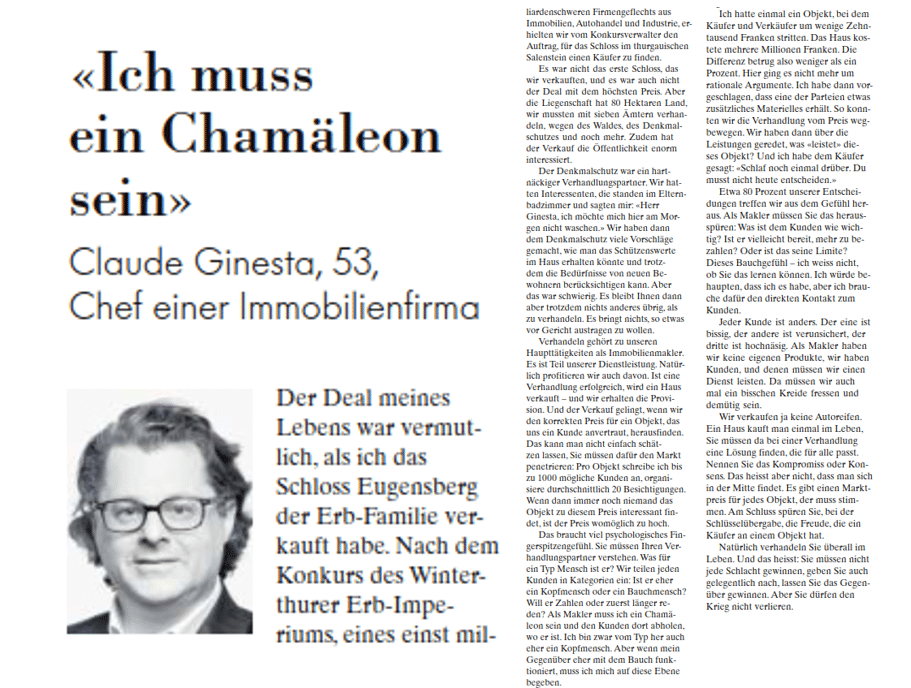
The conservation authorities were a stubborn negotiating partner. We had interested parties standing in the master bathroom and telling me: “Mr. Ginesta, I don’t want to wash here in the morning.” We then made a lot of suggestions to the conservation authorities about how we could preserve what was worth protecting in the building and still take the needs of new residents into account. But that was difficult. But then you still have no choice but to negotiate. There’s no point in trying to settle something like this in court.
Negotiating is one of our main activities as Real Estate agents. It is part of our service. Of course, we also benefit from it. If a negotiation is successful, a house is sold – and we receive the commission. And the sale is successful if we find out the correct price for a property that a client entrusts to us. You can’t just get an estimate, you have to penetrate the market: I write to up to 1000 potential customers per property and organize an average of 20 viewings. If nobody still finds the property interesting at this price, the price may be too high.
This requires a great deal of psychological intuition. You need to understand your negotiating partner. What type of person is he? We divide every customer into categories: Is he more of a head person or a gut person? Do they want numbers or to talk at length first? As a broker, I have to be a chameleon and meet the customer where they are. I am also more of a head person. But if my counterpart is more of a gut person, I have to get down to that level.
I once had a property where the buyer and seller were arguing over a few tens of thousands of francs. The house cost several million francs. The difference was less than one percent. This was no longer a matter of rational arguments. I then suggested that one of the parties receive something additional in material terms. This allowed us to move the negotiation away from the price. We then talked about the services, what does this property “do”? And I said to the buyer: “Sleep on it again. You don’t have to decide today.”
We make around 80 percent of our decisions based on our feelings. As a real estate agent, you have to feel this out: What is important to the customer and how? Are they perhaps prepared to pay more? Or is that his limit? This gut feeling – I don’t know if you can learn it. I would say that I have it, but I need direct contact with the customer.
Every customer is different. One is snappy, the other is insecure, the third is snooty. As brokers, we don’t have our own products, we have customers and we have to provide them with a service. We also have to be a little bit chalky and humble.
We don’t sell car tires. You buy a house once in a lifetime, so you have to find a solution that suits everyone in a negotiation. Call it compromise or consensus. But that doesn’t mean you have to find a middle ground. There is a market price for every property, and it has to be right. At the end, when you hand over the keys, you can feel the joy that a buyer has in a property.
Of course you negotiate everywhere in life. And that means: you don’t have to win every battle, give in occasionally, let the other party win. But you must not lose the war.
Click here for the NZZ report.

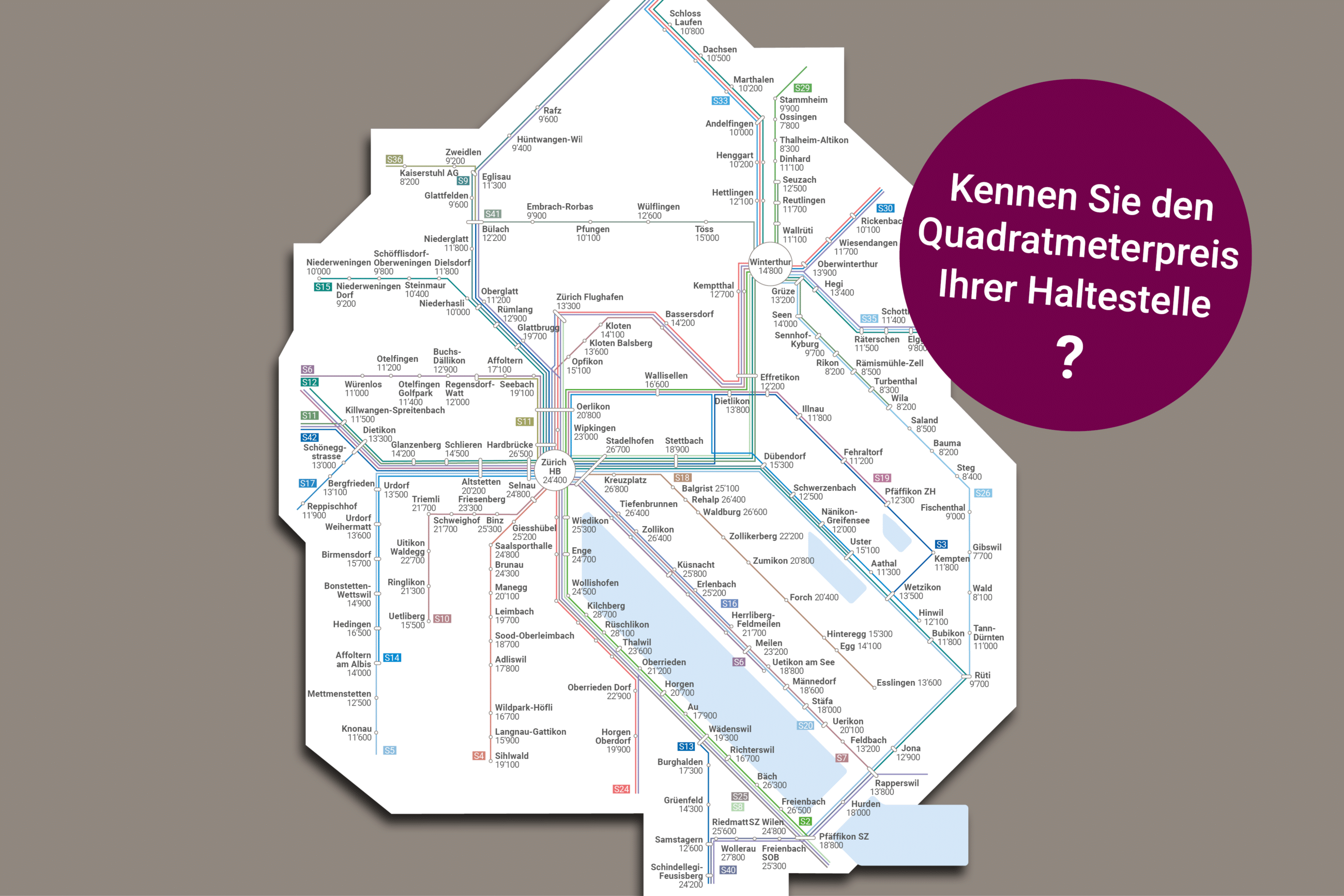
The Real Estate market is riding the S-Bahn
Reading time: 2 min

With “IN PASSING,” Claude Ginesta reveals a side of himself that few know.
Reading time: 3 min

Article in *Die Weltwoche*: Interview with Katerina van der Laan, “The Swiss Are Still Very Good Buyers”
Reading time: 9 min

Davoser Zeitung, Sept. 1, 1926: Ginesta Opens New Office in Davos
Reading time: 2 min