Your personal search profile
Receive the real estate offers you are looking for before they are even on the market.

Rent out

Date
14.4.2026
Share
At first glance, the abolition of the Imputed rental value sounds like good news for homeowners. At the same time, however, it shifts the entire system of residential property taxation. This is precisely the critical point. Because with the imputed rental value, key tax deductions for owner-occupied properties are also disappearing: maintenance costs, renovations and, for federal tax purposes, many energy-related investments will no longer be deductible in future, or only to a very limited extent. This means that a change in the tax system will quickly turn into a real problem for older homes.
The Federal Council has decided to change the system on 1.1.2029. The transition phase until the end of 2028 is crucial. This is because it is already changing the behavior of many owners. Anyone who has planned major Renovation work has a clear incentive to carry it out before the system change. As long as the current rules apply, such expenses can still be claimed for tax purposes. Afterwards, no longer.
This is precisely what is likely to become a major issue in the coming years: an early renovation push with a subsequent investment backlog. This can lead to higher demand in the renovation market, longer waiting times and, in some segments, more pressure on prices. After that, a major incentive will disappear. Anyone investing CHF 150,000 or CHF 250,000 in an older Property today can reduce the tax burden by 25-35% with a high marginal tax rate. cushion.
Houses do not usually fall into disrepair from one year to the next. What happens much more frequently when renovations are postponed is a gradual loss of substance. This results in a condition that prospective buyers recognize very clearly. Not only visually, but also financially. After all, a property with deferred Maintenance always means one thing for buyers: additional insecurity and early investment.
Older properties are particularly affected by this. A single-family home built in the 1960s, 1970s or 1980s often needs exactly the kind of work that is expensive: energy-efficient renovation, replacement of windows, Roof, pipes, heating, bathrooms and kitchen. Those who will no longer be able to deduct such investments from their taxes in future will weigh up the renovation costs carefully. Furthermore, an increase in the black economy is to be expected because homeowners will not need invoices for tax deductions.
This is relevant for the market because the difference between good and problematic properties is likely to widen further. Buyers are already taking a closer look at what needs to be done to a house in the next few years. In an environment in which renovations are becoming less attractive from a tax perspective, the willingness to take on a property with outstanding investment requirements at full price is decreasing. Buyers are calculating more carefully. Banks are paying more attention to Affordability. The costs of tradesmen remain high, especially in the transition period up to the end of 2028. And energy requirements and costs will not decrease just because the tax deduction no longer applies.
For owners of older properties, now is therefore the right time for a sober assessment. The crucial question is not whether the imputed rental value will fall. It is: What does the change of system mean in concrete terms for your own property? Anyone who will have to carry out a major renovation in the next few years anyway should ask themselves nowHow much Maintenance has built up? What work is realistic over the next five to ten years? How much capital would have to be invested? And how will the market react to precisely this type of property in the future?
Because one thing is clear: the older a property is and the more investments have been postponed, the more challenging a subsequent sale can be. Buyers become more critical. Price negotiations become tougher. And the gap between modernized homes and those in need of renovation is likely to widen rather than narrow. If you wait too long, you could be confronted with completely different buyer behavior in a few years’ time.
“Many owners underestimate the impact that the loss of tax deductions can have on investment decisions. Particularly with older properties, deferred maintenance can later become a real sales risk.”
Stefanie Bigler, Ginesta Real Estate
Not every older property should be sold. But every older property should be critically examined for renovation now. If it is foreseeable that significant investments will be required in the coming years and that there will be hardly any tax relief on these in the future, then a sale or immediate renovation is the more sensible solution than putting it off for years.
Do you own an older house or an apartment in need of renovation? Then it’s worth making a realistic assessment of marketability, investment requirements and the best time to sell. If you only sell when the maintenance has obviously been accumulated, you may come under pressure. Those who clarify things earlier have better options.

Deductions for first-time buyers (first 10 years) after the system change
For first-time buyers, practically only a temporary debt interest deduction remains – everything else is eliminated or massively restricted.

NZZ Residence, October 26: Interview with Claude Ginesta: “To me, providers of fixed-price models aren’t real Real estate agents”
Reading time: 8 min

World Habitat Day
Reading time: 5 min

Event: Real estate Gains Tax on the Sales of a Multi-Family Home
Reading time: 1 min
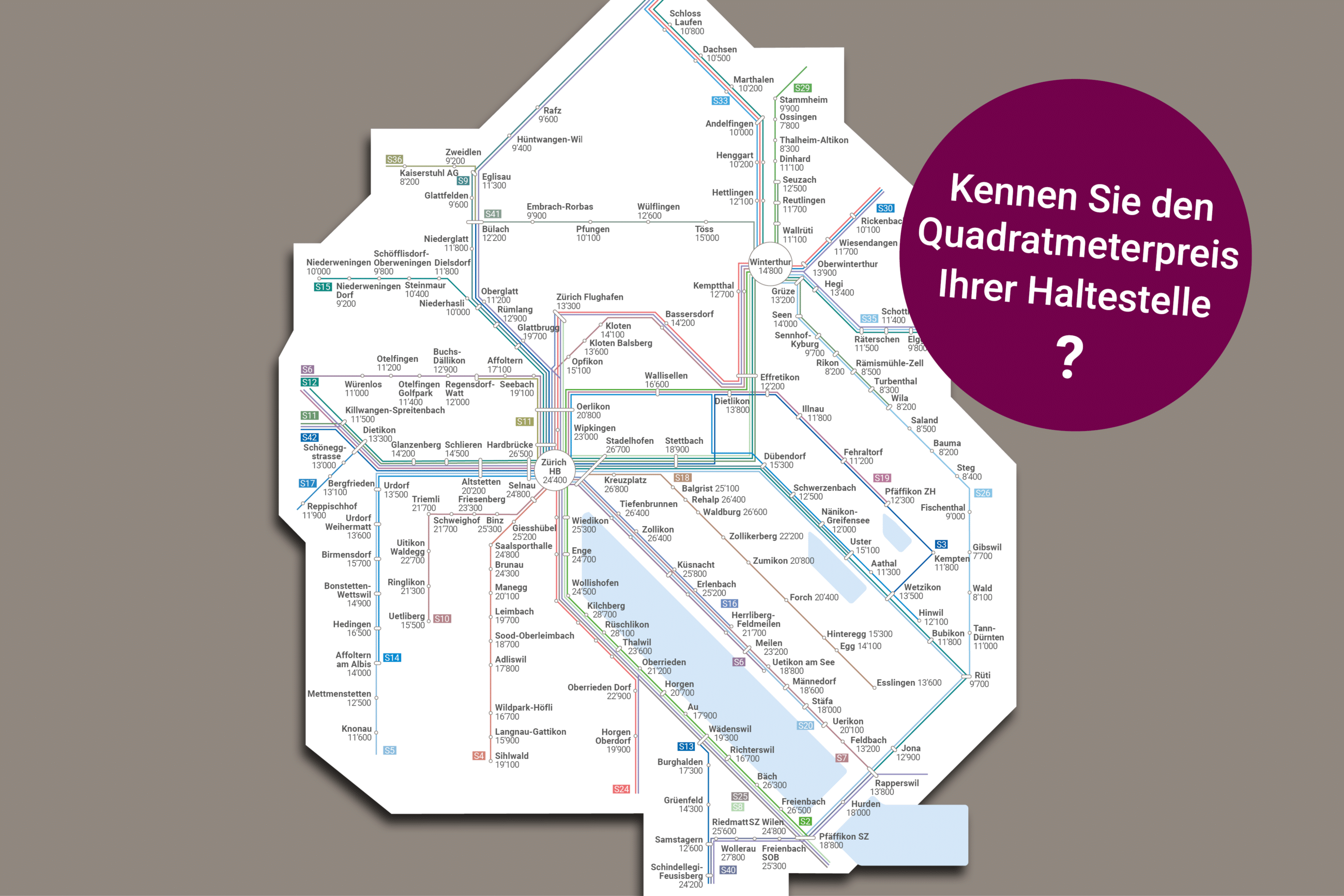
The real estate market is riding the S-Bahn
Reading time: 2 min