Your personal search profile
Receive the real estate offers you are looking for before they are even on the market.

Rent out
Date
24.10.2019
Share
Property owners and sellers are frequently confronted with various tax issues that arise both during the period of ownership and upon the sale of a property. It is therefore worthwhile to take a closer look at the various taxes, their implications, and their specific characteristics. Due to the complexity of the tax system, the following text will focus solely on the situation for individuals.
Income Taxes: Imputed Rent
This form of income taxation applies throughout Switzerland to homeowners who live in their own house, apartment, or vacation home. By living in their own home, the owner forgoes potential Rental income. However, this rental income would increase taxable income and, consequently, income taxes. The government does not voluntarily forgo this potential revenue. It therefore attributes a notional income to the homeowner. According to current Federal Supreme Court practice, this should amount to no less than 60% of the market rent. The calculation of the imputed rental value varies greatly from canton to canton. In most cases, the cantons rely on estimated land values and building insurance appraisals to determine the wealth tax value and the imputed rental value.
Homeowners can claim two types of deductions from the calculated Imputed rental value: first, the mortgage interest paid, and second, expenses for maintenance and repairs (expenses that preserve value, but not those that increase it). While mortgage interest is generally deductible, the rules governing the deductibility of building maintenance vary widely from canton to canton. Either a flat-rate amount (10%–25% of the imputed rental value) can be deducted from the imputed rental value as a building maintenance allowance, or—if the actual, verifiable expenses were higher—the actual costs can be deducted in most cantons. In many cantons, this option is available on an annual basis, while in others, the deduction method must be specified for a specific period (e.g., 5 years).
The imputed rental value increases a homeowner’s taxable income. Despite the deductions available for Maintenance costs, this amount cannot be substantially reduced without deducting mortgage interest. Older people in particular—who have paid off their mortgages and live on a pension—complain about this tax practice, which results in a significant increase in their taxable income. Due to today’s very low mortgage interest rates, a home must generally be mortgaged for 60%–70% of its current value in order to avoid any negative tax implications. The issue has been recognized at the political level, and the National Council and Council of States have already addressed the abolition of the imputed rental value (and the associated elimination of deductions for maintenance and mortgage interest) on several occasions. So far, however, no proposal has garnered sufficient support to pass.
Property taxes: For Property tax purposes, real estate is assessed at only about 70% of its market value. When purchasing a property for CHF 1 million, one can therefore expect a tax-related reduction of approximately 30%, or CHF 300,000, in taxable assets. Taxable assets are reduced by this amount, resulting in a (slight) reduction in taxes. However, property owners have no influence—positive or negative—on property taxes.
Property Taxes
Twelve cantons (BE, LU, FR, AI, SG, GR, TG, TI, VD, VS, GE, JU) impose an annual property tax on the ownership of private Real estate. This tax can be levied either at the cantonal or municipal level and ranges from 0.3 to 3 per mille of the official market or assessed value, depending on the canton.
Property Gains Tax The tax that often causes homeowners the most concern is the property gains tax. This tax is levied by cantons and municipalities, but not by the federal government, and represents a very important source of revenue.
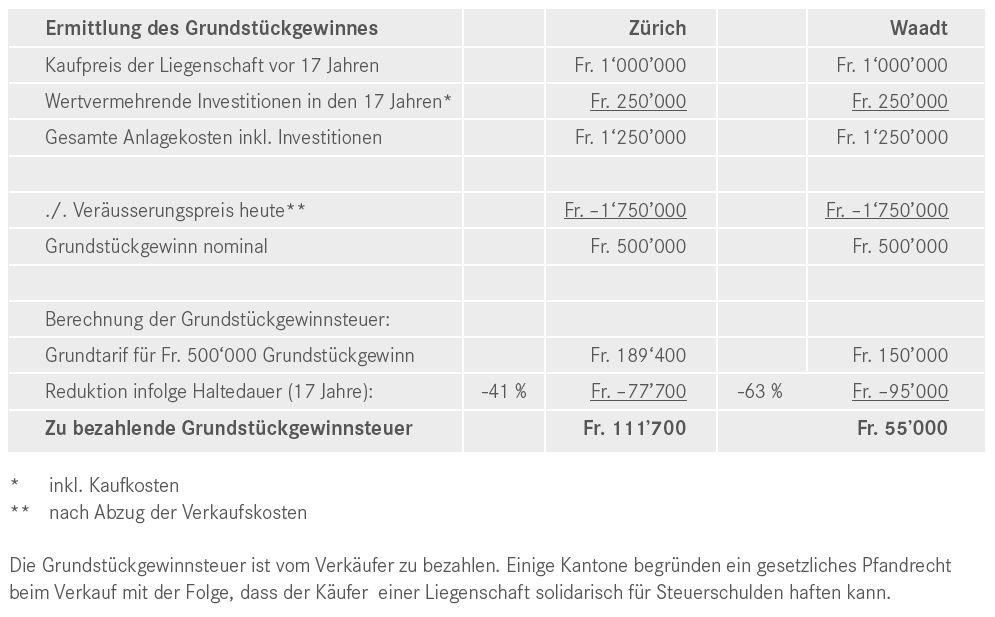
The gain on the sale of Real estate is calculated as the difference between the sale price and the purchase price. Normally, it is possible to add the value-enhancing investments made since the purchase to the cost basis. In addition, depending on the holding period, the government grants a reduction (discount) on the tax rate. This partially accounts for inflation between the time of purchase and the time of sale. A full adjustment of the purchase price for inflation is possible only in a few cantons.
Property gains tax is illustrated below using an example from the cantons of Zurich and Vaud:
Real Estate Transfer Tax A real estate transfer tax is levied on property sales; depending on the canton, this tax can range from 0.35% to 3.3% of the notarized sale price. Some cantons apply a lower rate for long-term holdings. Depending on the canton, the tax is borne by either the buyer or the seller; in several cantons, the tax is split between the buyer and the seller, or individual agreements apply. Under such conditions, both parties are jointly and severally liable for tax claims. For transfers of ownership between spouses, as a result of inheritance, gifts, or sales ordered by the bankruptcy court, reduced rates apply in most cantons, or the tax is waived entirely. In some cantons, such as Zurich, the transfer tax has been abolished.
Additional fees incurred when purchasing a property (excluding taxes)
There are many ways to optimize property gains tax:
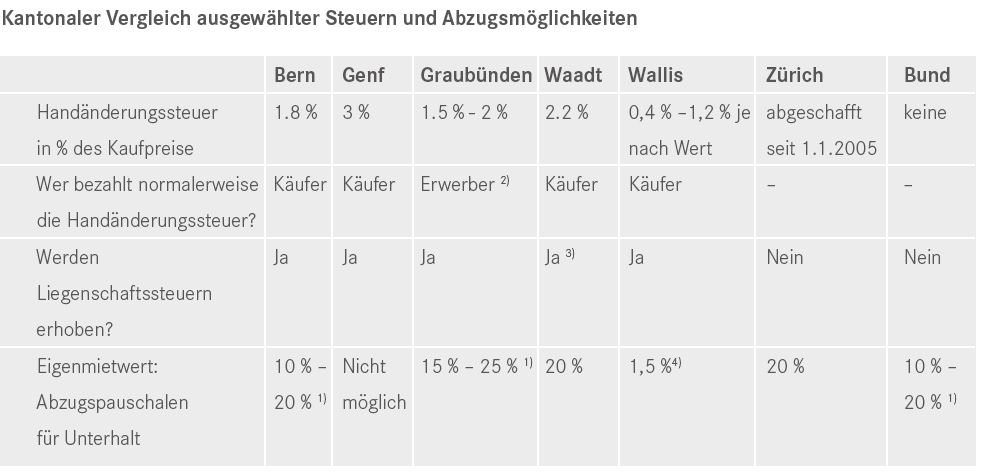
1) Depending on the age of the building
2) Any differing contractual agreements will be taken into account, provided that the seller is not subjectively exempt from tax.
3) Levied only on certain properties owned by legal entities
4) As a percentage of the cantonal Tax value
Author: Claude Ginesta
Claude A. Ginesta is a Federally Certified Real estate trustee and CEO/Owner of Ginesta Immobilien AG.
The company was founded in 1944 and specializes in real estate sales in the Zurich and Graubünden regions. For properties of supraregional significance, the company operates as a real estate broker throughout Switzerland via its branches in Küsnacht, Horgen, and Chur.
Publisher of the “Illusions” series: Ginesta Immobilien AG, www.ginesta.ch

NZZ Residence, October 26: Interview with Claude Ginesta: “To me, providers of fixed-price models aren’t real Real estate agents”
Reading time: 8 min
World Habitat Day
Reading time: 5 min
Event: Real estate Gains Tax on the Sales of a Multi-Family Home
Reading time: 1 min
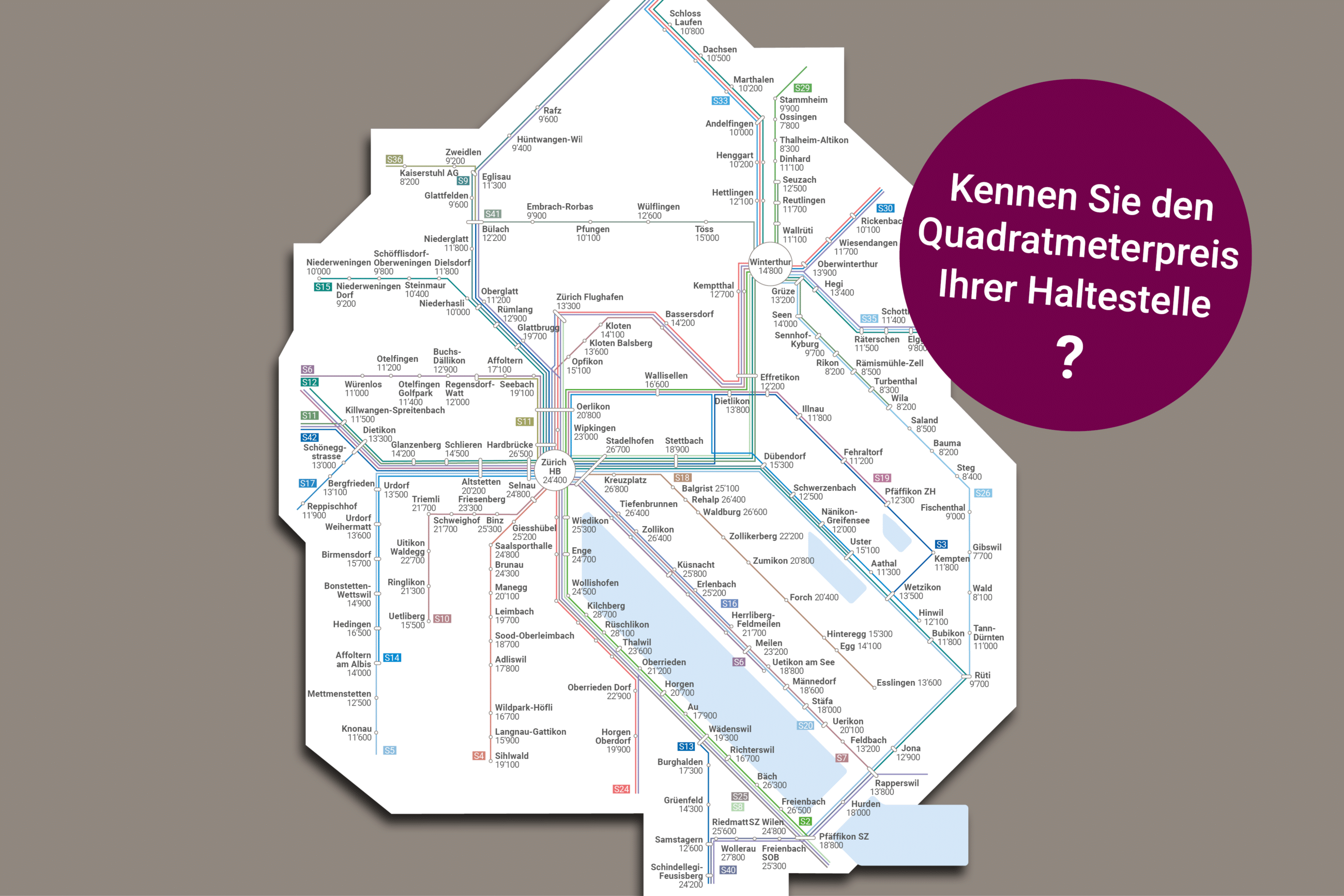
The real estate market is riding the S-Bahn
Reading time: 2 min