Your personal search profile
Receive the real estate offers you are looking for before they are even on the market.

Rent out
Date
23.2.2022
Share
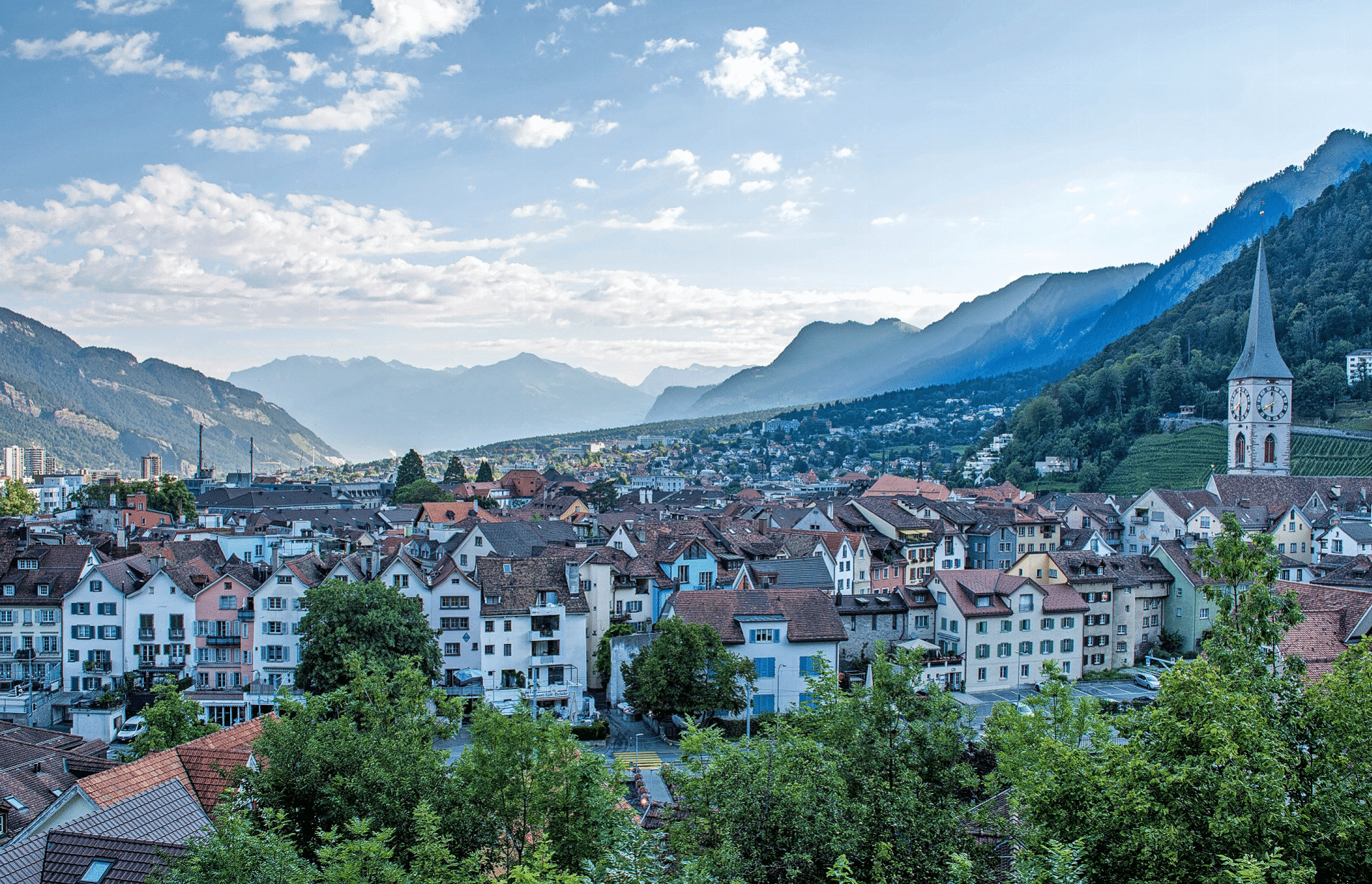
Mr. Ginesta, people like living in Chur. This is demonstrated by the few vacant rental apartments and the high demand for home ownership. Why is that?
Sascha Ginesta, Partner at Ginesta Real Estate and Head of Brokerage for Graubünden: “Generally speaking, we’ve noticed that, due to the pandemic, living in the city is actually less in demand. However, we’ve also seen that the city of Chur has experienced an upswing in recent years because it has done many things right.” Compared to larger cities like Zurich or Bern, Chur is simply not a major metropolis. Because of the pandemic, we’re seeing an increasing shift in where people choose to live—from large cities to smaller towns. That’s one trend. Another trend—which was already present before the pandemic—is that more and more people are moving from the valleys into the city. In addition, it’s not just residents of Graubünden who are currently flocking to the cantonal capital, but also people from larger cities across Switzerland. Furthermore, we mustn’t forget that Chur has a growing student population. What’s unique about the city is that it isn’t expanding significantly outward. Chur has a limited supply of housing, which in turn drives up prices—especially when it comes to single-family homes.
What makes a place like Chur attractive to live in?
It is the infrastructure, shopping facilities, transport links, public transport, childcare options, schools, cultural offerings, leisure activities and proximity to the workplace. However, the latter need is changing due to home office options. Today, it is no longer a problem to live an hour and a half away from the workplace. This has caused a shift in many regions. Chur has benefited from this. With a home office or partial home office, workplaces in Zurich or St. Gallen are very easy to reach from Chur. Chur is also close to the major tourist regions of Arosa/Lenzerheide and Flims/Laax/Falera. This makes Chur attractive on the Swiss market.
You mentioned home ownership earlier. This is rare and expensive in Chur. Has the need to own property increased in recent years?
The need for property is linked to the need for possessions. You want to own something. This has always existed and always will. The pandemic has not necessarily boosted this market, but the reason for its short-term popularity is low interest rates. This makes home ownership attractive. It is currently effectively cheaper than renting. And it is an investment. Once you have bought a property, you are on the real estate market merry-go-round.
It should not be forgotten, however, that the price of land in Chur is over 1,500 francs per square meter. Who can afford that? Has housing become a luxury?
Home ownership has become a luxury, yes. If a property costs a million, that means I have to raise a quarter of my own funds. In other words, around 250,000 francs. To be able to pay the mortgage of 750,000 francs, I have to generate an income of around 140,000 francs. That’s possible if there are two of you, but it’s more difficult on your own. Nevertheless, demand is high, which shows that the funds are available. But of course – and we don’t have to kid ourselves – not everyone can afford to buy a home. Compared to other regions, however, Chur still has moderate prices. It’s a different story in Zurich.
What is the situation on the rental housing market in Chur?
This is somewhat more liquid. The supply is there, although the trend is downwards, but anyone who wants to live in Chur will find an apartment. However, rental prices are also rising. This has to do with demand on the one hand and the economic situation on the other. Rental prices have risen, but – I dare say – not to the same extent as home ownership.
Have the needs of tenants changed in the last two years?
Yes, the demands on living space have changed as a result of the pandemic. Many people have had time to be at home and deal with their own homes. For many, the situation was not satisfactory. Initially, we observed a trend of people moving from the city to the countryside. We had vacancies in the cities. But that has already changed again. What has also changed as a result of the pandemic is the need for space. Today, additional space for an office is an issue. That was never in demand before. The demand for square meters per capita has generally been rising slightly for several years. The needs have effectively changed. Whether these changes are sustainable will become clear in a few years’ time. We also used to have some difficulty renting or selling garden apartments. Suddenly these apartments were in demand. Everyone wanted a garden. The fact that many people have been dissatisfied with their housing situation over the past two years has made the rental market more dynamic.
Should the housing offer in the city of Chur look different?
Given that Chur has recently seen a lot of construction activity, I would say that the needs are being met. Not only in the residential sector, but also in the public sector. A lot has happened there in recent years.

Sascha Ginesta: “The demands on living space have changed”
NZZ Residence, October 26: Interview with Claude Ginesta: “To me, providers of fixed-price models aren’t real Real Estate agents”
Reading time: 8 min
World Habitat Day
Reading time: 5 min
Event: Real Estate Gains Tax on the Sales of a Multi-Family Home
Reading time: 1 min
The real estate market is riding the S-Bahn
Reading time: 2 min