Your personal search profile
Receive the real estate offers you are looking for before they are even on the market.

Rent out

Date
3.8.2026
Share
The debate over imputed rental value has been a topic of discussion in Swiss politics for years. With the decision to phase it out as of January 1, 2029, the issue seems to be settled for many homeowners. In reality, however, this is when the consequences of the system change will become apparent. This is because the elimination of the imputed rental value also means the loss of important tax deductions. Anyone who renovates their roof, replaces their heating system, or improves the energy efficiency of their home’s building envelope today can claim the costs as value-preserving maintenance under the current rules. After the system change, this will generally no longer be possible for owner-occupied residential property.
The key question for homeowners is therefore not whether the reform is good or bad. What’s far more important is: What impact will it have on the long-term value of their property? In the districts of March, Höfe, and Einsiedeln, home ownership is the single greatest asset for many families. The financial implications of any major investment decision are correspondingly significant.
Anyone renovating a home they live in today benefits from an important principle of Swiss tax law: Investments made to maintain the property’s value can generally be deducted from taxable income.
These include, for example, replacing a heating system, re-roofing, installing new windows, or renovating the building envelope. The situation is different for value-adding investments such as an addition, an extra garage, or an expansion of living space. Such measures have never been tax-deductible.
It is precisely this distinction that is often overlooked in public discourse. A high-quality bathroom renovation, for example, may represent a significant investment for a homeowner that has greatly enhanced their quality of life. For the tax authorities, however, personal taste is not the deciding factor; rather, the key question is whether the renovation maintains the property’s previous condition or creates additional value.
For property owners, this means that the key question is not whether to invest, but which investments will yield the greatest long-term benefits for the property.
That is precisely why the discussion should not be framed solely in terms of taxes. Not every investment is tax-deductible or automatically increases the market value. The key factor remains which measures actually improve a property’s technical quality, energy efficiency, and long-term appeal. In the event of a sale, however, value-enhancing investments usually have a positive effect on the selling price, while value-preserving investments increase the chances of a sale.
The elimination of the imputed rental value not only removes the taxation of a notional rental income. At the same time, the previous maintenance deductions for owner-occupied residential property are largely eliminated—for both direct federal tax and cantonal and municipal taxes.
This is precisely where an aspect comes into play that is often more relevant to homeowners than the tax savings themselves: For example, someone planning a comprehensive roof, facade, or heating system renovation costing 200,000 francs today can claim the costs as a tax deduction over several years, depending on their income and place of residence. For those with higher marginal tax rates, this can reduce the effective financial burden by as much as several tens of thousands of francs in some cases. Starting in 2029, this calculation will change. The investment will remain economically sound, but the tax-based co-financing effect will no longer apply.
For property owners, this does not mean that renovations will become less attractive. Rather, it means that in the future, a clearer distinction is likely to be made between necessary investments, measures to preserve value, and improvements aimed purely at comfort.
The Ausserschwyz region benefits from a high quality of life, an attractive location, and stable long-term demand for home ownership. These factors point to a robust Real Estate market in the future as well.
Nevertheless, market participants are already observing that prospective buyers are scrutinizing the technical condition of a property more closely than they did a few years ago. Energy costs, heating systems, the building envelope, and foreseeable investments are increasingly factored into the purchase decision. The focus is less on whether a property is modern or old. Rather, the decisive factor is whether necessary investments have been carried out in a transparent manner and properly documented.
For example, those who have renovated their roof, windows, heating system, or exterior in recent years are not only improving the quality of living but also often providing transparency and planning certainty for future buyers. Conversely, buyers are likely to do more careful calculations than before when considering properties that require significant investment. For owners, this means one thing above all: the condition of the property is becoming even more important. Not because demand is falling, but because differences in quality are becoming more apparent.
What is less well known is that the reform does not affect all real estate equally. For rented apartment buildings, investment properties, or rented portions of residential units, maintenance costs remain deductible as expenses. The tax treatment thus continues to differ from that of a property used exclusively for personal residence.
This is particularly interesting for owners of single-family homes with a granny flat or mixed-use properties. In these cases, different tax rules may apply simultaneously. For such properties in particular, a case-by-case analysis is far more valuable than generalizations.
Perhaps the most important aspect of the reform is surprisingly rarely discussed. The transition period, which runs until the end of 2028, gives homeowners the opportunity to review planned investments and reassess their living situation. Does their home still meet their wishes and needs for the coming years?
Particularly when it comes to properties that have been in the family for decades, fundamental questions often arise: Should we make another major investment? Should we continue to live in the property ourselves for the long term? Is the property suitable for the next generation? Or would Sales be the more financially sensible solution?
The answers vary from property to property and depend on each individual’s life circumstances. Experience shows that many owners initially focus on tax considerations. However, it often turns out that the crucial questions lie elsewhere: How will maintenance costs evolve over the next ten years? For example, will I still be able to maintain the garden myself in the future, or will costs rise because I’ll need outside help? Which investments actually add value? And does the property still align with my personal life plans?
“An early analysis provides a basis for decision-making—not only for tax reasons, but also to determine which strategy best aligns with one’s own long-term goals and the property’s development.”
“The elimination of the imputed rental value is a good opportunity for many homeowners to take a closer look at their property and their future plans—regardless of whether renovation, long-term ownership, or Sales ultimately proves to be the right solution.”
Christine Zeder, Head of Brokerage, Pfäffikon SZ
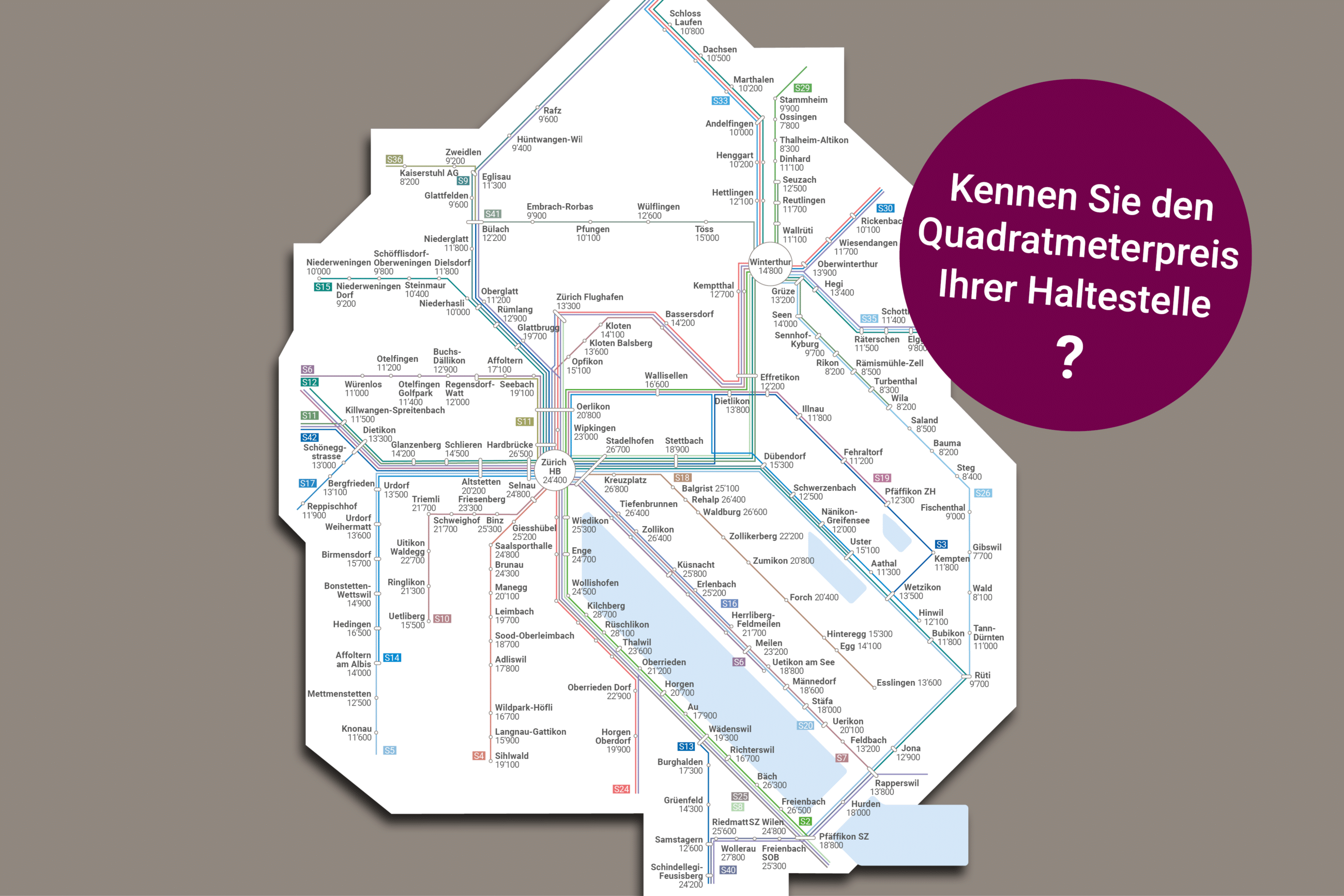
The Real Estate market is riding the S-Bahn
Reading time: 2 min

With “IN PASSING,” Claude Ginesta reveals a side of himself that few know.
Reading time: 3 min
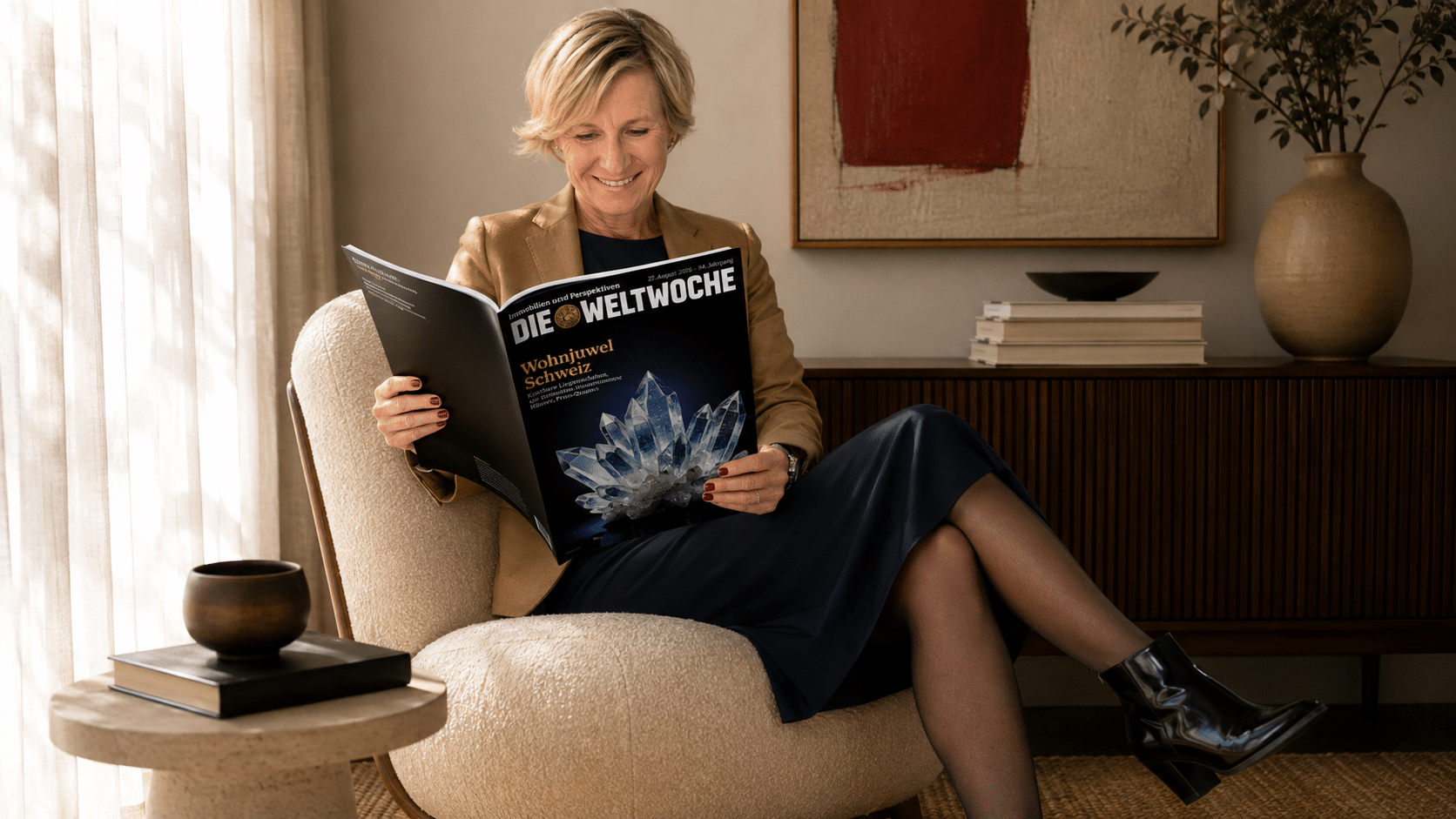
Article in *Die Weltwoche*: Interview with Katerina van der Laan, “The Swiss Are Still Very Good Buyers”
Reading time: 9 min

Davoser Zeitung, Sept. 1, 1926: Ginesta Opens New Office in Davos
Reading time: 2 min