Your personal search profile
Receive the real estate offers you are looking for before they are even on the market.

Rent out

Date
12.12.2025
Share
Anyone who inherits a property has to make a fundamental decision: keep or sell? Emotional aspects often come into play, especially with parents. The idea of moving in there themselves is appealing to many – and challenging at the same time. In addition to the personal commitment, practical questions need to be clarified: Does the property meet your own living requirements? Is it up to date in terms of energy and construction? Do other co-heirs have to be paid out? And how does the imputed rental value affect the tax burden, i.e. the notional income that has to be taxed for owner-occupied residential property?
Renting out an inherited house or apartment appears to be a pragmatic solution: the property remains in your possession and regular income is generated. But the reality is often sobering. Many old properties are in need of Renovation, which limits their rentability or requires high investments. In addition, the taxable income (rental income minus maintenance and mortgage interest) must be declared as income – which in many cases leads to a higher tax burden. Depending on the canton, the imputed rental value may not apply, but the bottom line is that the return often remains modest.
Especially in the case of communities of heirs, Sales are often the simplest solution. They clarify the situation, prevent potential disputes, and provide financial flexibility. In times of high Real Estate prices, substantial capital gains can be realized. However, these are subject to real estate gains tax, the rate of which varies by canton and holding period—even for long-term ownership, five-figure or even six-figure amounts may be due. Notary and property transfer fees should also be factored in. Anyone who can provide proof of investments or incidental selling expenses should claim these on their tax return.
Many inherited houses stand on spacious plots with development potential. One future-oriented option is therefore further development: be it through replacement buildings, the construction of an apartment building or the division into condominiums. Such projects require capital, time and sound planning – but can create considerable added value in the long term. A professional location and market analysis is essential here, as is an examination of the building law framework. If you plan the project carefully, you can benefit both fiscally and economically.
If you want to move into an inherited family home yourself, you should soberly check whether the property is suitable for your own living situation. Many older houses no longer meet today’s requirements in terms of comfort, energy efficiency or layout. Renovations – for example in the areas of heating, roofing, insulation or electrical installations – can cost a lot of money. At the same time, the imputed rental value must be taxed, which means a noticeable additional burden depending on income. Even in this scenario, an objective assessment and sound financial planning are crucial.
“Whether renting, Sales, developing, or using the property yourself—each option has its merits, depending on the circumstances. Key decision-making factors include the condition of the property, its location, the market environment, family circumstances, and tax implications. An early and objective assessment helps avoid poor decisions and find sustainable solutions.”
David Feldmann, Head of Brokerage, Chur
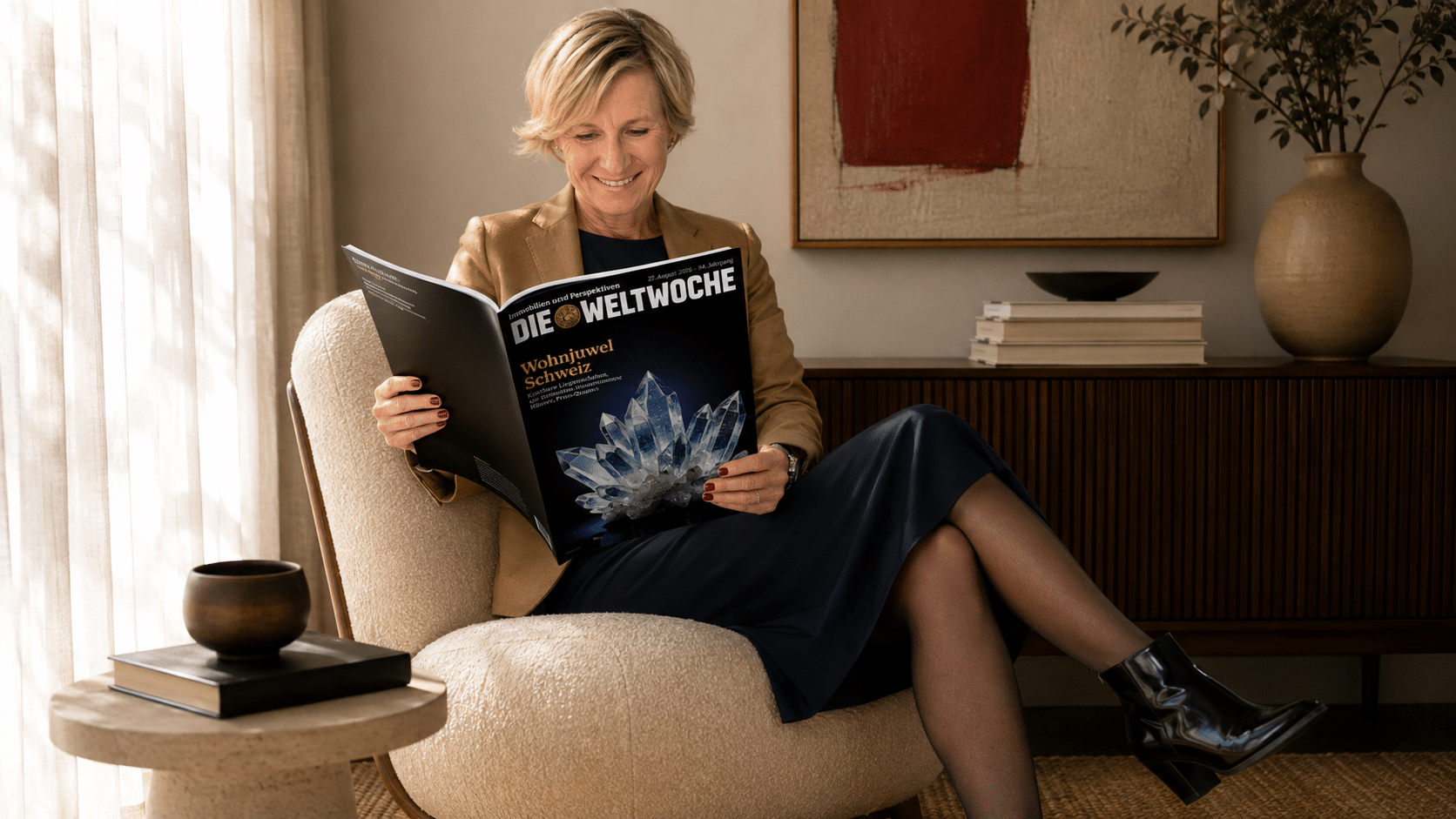
Article in *Die Weltwoche*: Interview with Katerina van der Laan, “The Swiss Are Still Very Good Buyers”
Reading time: 9 min

Davoser Zeitung, Sept. 1, 1926: Ginesta Opens New Office in Davos
Reading time: 2 min

Wellbeing@Work: Ginesta Launches New Program for Employees
Reading time: 5 min

Nadine Suter will become the site manager of Ginesta’s new location in Davos
Reading time: 6 min