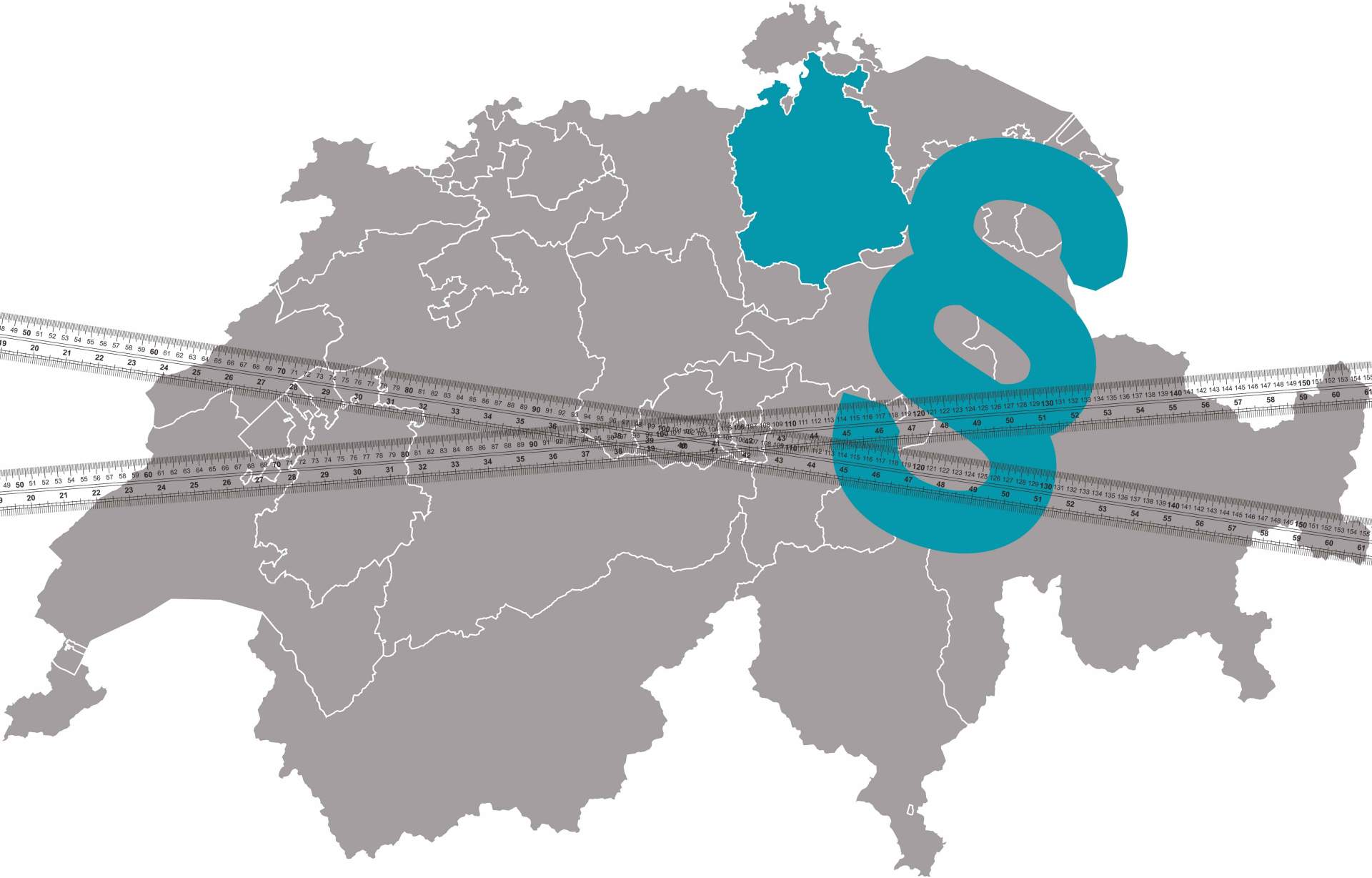
Many of these terms are of course primarily important for architects who are submitting a planning application. However, the following changes may also be of interest to you as a property owner. It should also be mentioned that some municipalities have already included these terms in a revision of the building regulations, while others have not yet done so. It is therefore necessary to check exactly what the current situation is in each municipality.
And now, the most important thing in a nutshell:
- The relevant terrain used to be determined by the existing course of the ground. This meant that the ground could be changed when a property was built twenty or thirty years ago and this change was valid. The new situation is that the natural course of the terrain is valid. In other words, the way the ground was before it was ever changed. If it is no longer possible to determine the old state, the course of the terrain in the surrounding area is assumed. However, it is rumored in certain municipalities that new court rulings are already calling this “new practice” into question again. It therefore remains exciting to see how the established terrain will be interpreted in the future. At the same time, this uncertainty is not ideal for planning security.
- Buildings that are no higher than 1.50 meters and have a usable area of no more than two square meters are no longer considered buildings and can be erected anywhere, even directly on a border. They also do not require a building permit.
- On the other hand, there are small buildings that do not require a permit, which may be a maximum of two and a half meters high and have a maximum floor area of six square meters. A reduced boundary and building clearance applies to them and they also no longer require a building permit.
- Projecting building parts may protrude a maximum of two meters into the boundary distance and no longer one and a half meters as before, for half and not one third of the façade length as before. In addition, the projections may extend as far as the first floor.
- The knee height was increased from 0.9 meters to 1.5 meters. However, it is measured on the outside of the roof and no longer on the inside.
- The minimum clear height is measured between the upper edge of the finished floor and the lower edge of the finished ceiling or joist layer. It is still 2.4 meters and 2.3 meters in core zones.
- In roof spaces, the height must be at least half of the floor area.
- are storeys other than basement, attic and attic storeys. The roof, attic and basement storeys can also replace a full storey, but together they may never exceed the number of a full storey.
- The chargeable plot area in the case of a forest distance now corresponds to the entire area that lies within the building zone . Previously, it was only the first 15 meters from the forest distance line. The area of house access roads is taken into account for the utilization/building mass calculation. The areas of the basic, coarse and fine development are not taken into account. In the opinion of experts, there is some uncertainty here as to how the terms are to be interpreted exactly.
- For the building mass index the “above-ground enclosed space” is replaced by the building volume above the relevant terrain in relation to the chargeable plot area. An additional building mass figure for volumes that serve to save energy can be used in addition, up to twenty percent of the zoned basic figure.
- The green area ratio is replaced by the open space ratio. It is the ratio of the chargeable green area to the chargeable plot area. It is very important that the chargeable green area only includes parts of the plot that are not sealed and do not serve as parking areas, i.e. pure garden areas. This should have a significant impact and reduce the permitted building area considerably.
The building and zoning regulations of the municipalities in the Canton of Zurich can be accessed online via the municipal websites. There you can see the current status. If you would like to delve deeper into the topic, we recommend the comprehensive workbook “Harmonization of construction terms and measurement methods according to IVHB in the Canton of Zurich” by Suter von Känel Wild, which we have used as a source for this article with their permission. We would like to take this opportunity to thank them.