Your personal search profile
Receive the real estate offers you are looking for before they are even on the market.

Rent out
Date
26.11.2020
Share
Mr. Ginesta, how has the demand for Living space developed?
Compared to the past, we need considerably more Living space – an average of 41 square meters per resident. With the economic upturn of the 1970s, living space became larger. Higher wages, rising divorce rates and women earning their own money became a new trend: more and more people wanted to and were able to live alone in an apartment and required more and more space. In the past, some families were satisfied with a three-room apartment, but today they are expected to have four rooms or more. The days when all the children slept together in one room are over. But the children still had their fun.
Terraces and balconies also seem to be getting bigger and bigger?
Clearly. In the 1950s, the small balconies were only suitable for smoking cigarettes or hanging out military clothing. Today, people are asking for large terraces where they can eat, chill out and sunbathe.
The importance of the kitchen has also changed dramatically.
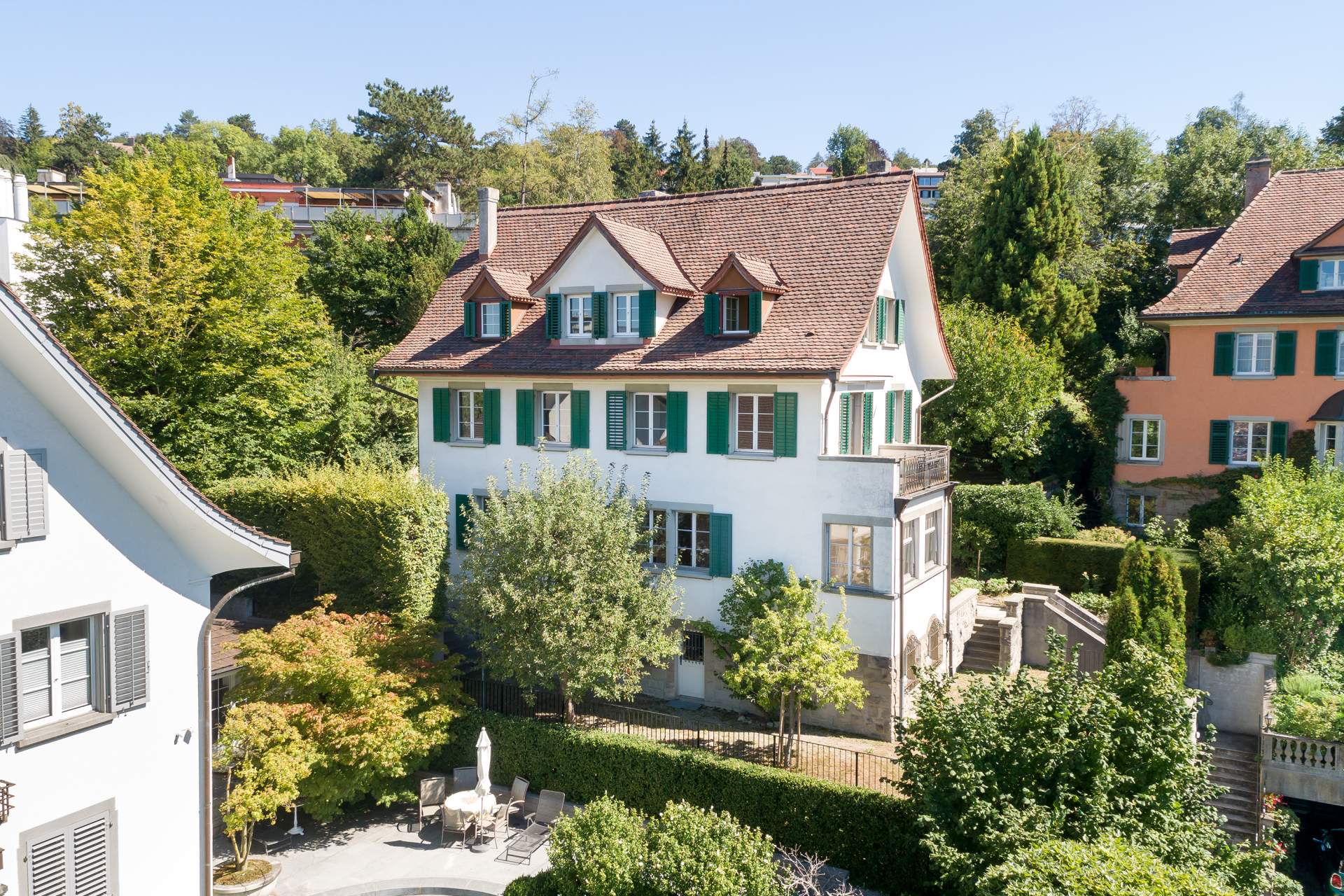
Yes, enormously. The kitchens in villas on the Zürichberg used to be in the cellar. This kept the servants at a distance. The food was pulled upstairs on a rope in the goods lift – the intimacy of family and guests remained undisturbed. When people could no longer afford domestic servants and the women began to cook for themselves, the kitchen was brought upstairs and initially set up on the north side of the house. 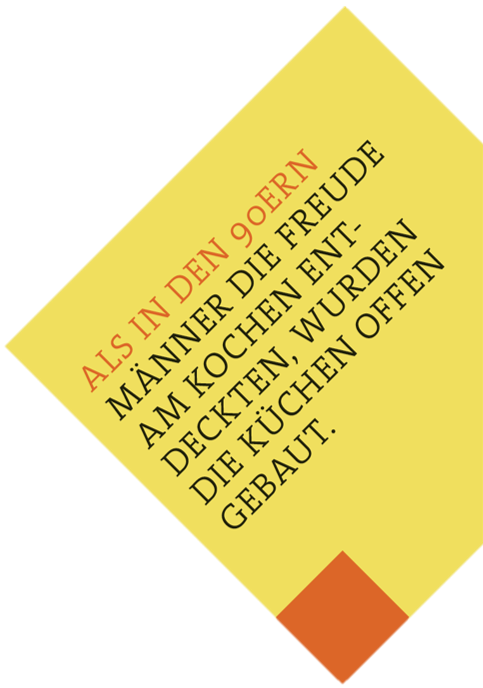 You shouldn’t look into the housekeeper’s pans or see the mess in the kitchen.
Today, open kitchens are standard. How did this come about?
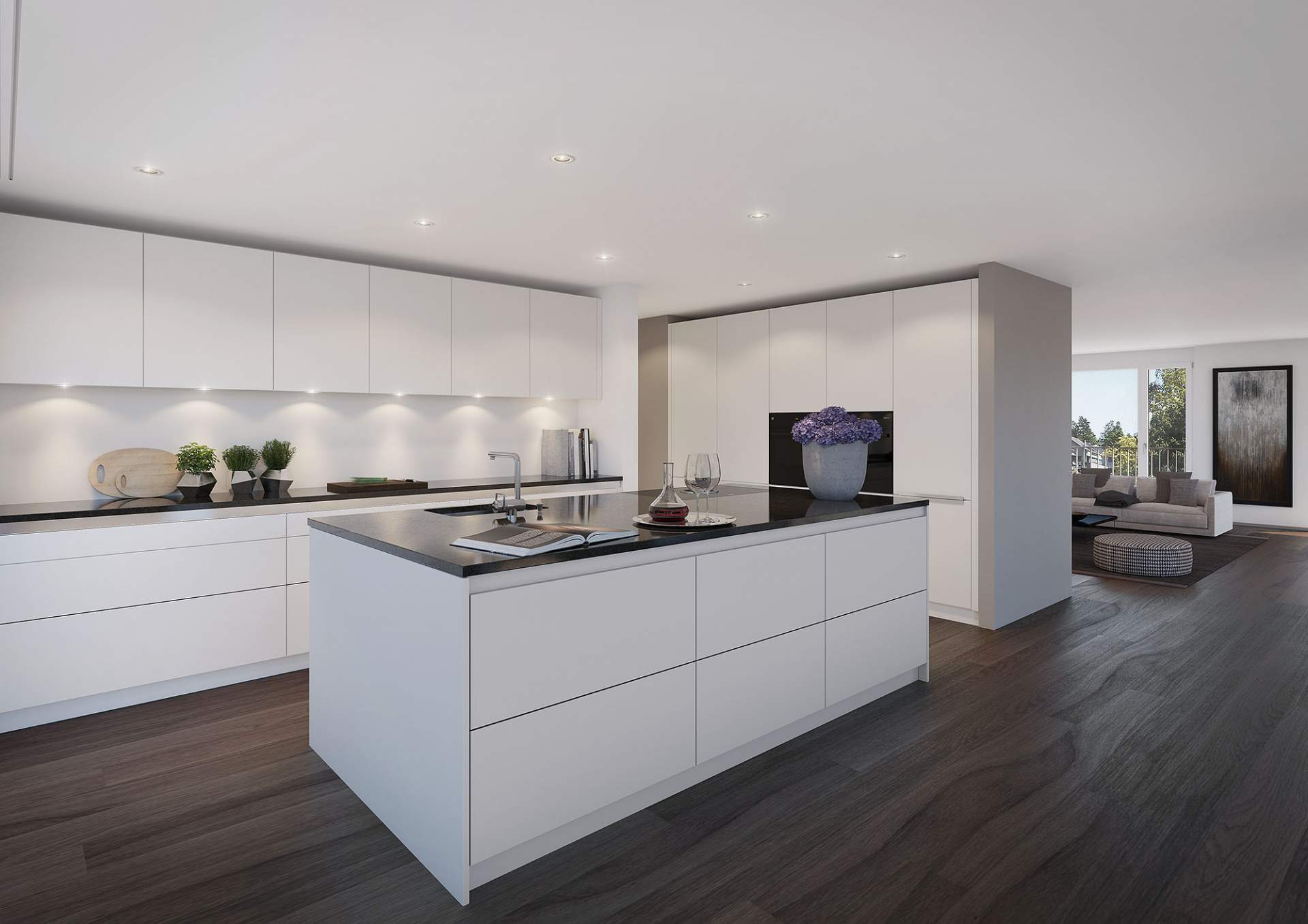
Over time, the women wanted better locations, if possible with light and a view, and the kitchen became increasingly important and was moved to the south side. When men discovered the joy of cooking in the 1990s, the walls were torn out. The open kitchen became a trend. We men love an audience and don’t want to miss out on any of the entertainment.
Bathrooms are becoming more and more luxurious. Have they become living Rooms?
Nowadays, the bathroom is an expression of exclusivity. Whereas in the 1960s there was one bathroom for a family with two or three children, today there is one per children’s room in luxurious properties. Bathtubs are here to stay – from the tub to the Füessli bathtub, which can still be seen here and there in an apartment, to whirlpools. Even though people have practically only been taking showers for the last 20 years, the bathtub seems to be an integral part of most bathrooms, regardless of the amount of water and space it takes up.
And what are the trends in floor coverings?
Floors used to be wooden board constructions onto which parquet strips were laid. This was no longer possible with the new concrete floors – cube parquet was now glued to underlay floors. In the 1960s, when cube parquet was no longer in vogue, fitted carpets came into fashion, which were often glued to the cube parquet. The rapid breakthrough of underfloor heating led to the stone flooring trend in the 1970s: everything from ceramic tiles to slate and marble was now laid. After 2000, people returned to wood because it was now possible to lay long strips on cement screed; simpler apartments were fitted with artificial parquet floors. Currently, cast floors are the must-have for trendsetters – the industrial feeling is back!
Owning or renting: Which residential properties are in demand today?
For years, low Mortgage interest rates have ensured that owners’ housing costs are lower than those of tenants. There is also a trend towards buying residential property, preferably a house. According to the NZZ Immo-Barometer 2018, around a fifth of people looking to move have been looking for a house for 20 years; 18% want to buy an apartment. However, 44% of people are still looking for a rental property, as this is not dependent on capital.
Is the search only based on financial possibilities or are there other criteria?
Of course, financial means play a key role, but age, stage of life, family circumstances and other practical considerations also determine how and where you live. Home ownership is and remains a privilege: even when interest rates are at an all-time low, anyone who wants to get a mortgage needs a certain amount of assets and a secure income.
And which location is preferred?
Even though, according to Real estate experts Wüest & Partner, the number of newly built single-family homes fell between 2000 and 2018, the single-family home remains the most sought-after form of housing, preferably quiet and with a view of the countryside. Even though cities have done a lot to make urban living more family-friendly and more and more streets are being calmed with 30 km/h speed limits, 20% of tenants and 10% of homeowners prefer to move to the countryside or to suburban agglomerations with good transport links, according to the Real Estate Barometer. The older generation is increasingly demanding an elevator and short distances to grocery stores and public transport. Peace and quiet and a view are still popular, but are no longer as important as they used to be.
The meublement of the last 100 years
Building material determines the style of living
Throughout the ages, the style of living has always been characterized by building style and building material. The sober and reduced Bauhaus style of the 1920s with flat roofs was one of the most influential aesthetic trends of the 20th century and could only be realized thanks to the invention of concrete. The new building material led to a departure from the old architectural style with symmetrically placed windows, ornate decorations and homage to the golden ratio. Of course, the historic building fabric lost none of its charm, and old building materials were given new appeal in a modern form: In the 1940s, industrial buildings were turned into lofts in disused London and New York factory buildings – a trend that continues unabated to this day.From reduction to provocation
The ornate shapes and feudal decorations were transformed into purity and simplicity. However, the furniture of the Bauhaus era, which was intended to be mass-produced for a world in which even workers could live more beautifully, is now a status symbol and no longer affordable for everyone. From the 1960s onwards, American architects were the first to question the cool sobriety of contemporary architecture. Roberto Venturi, American architect and one of the leading theorists of postmodern architecture, contrasted Mies van der Rohe’s “Less is more” with a polemical “Less is a bore”. The postmodernism of the 70s and 80s presented witty objects that were no longer primarily functional, but instead colorful, sensual, provocative and created by designers against the dogma of “good form”.Current: Heterogeneity and the trend towards sustainability
Interior design in the 21st century takes many different forms. Designers and producers emphasize that clear ideas are needed for a clean style. Countless glossy interior design and living magazines, living blogs and catalogs from furniture stores are dedicated to living dreams. They praise purism and individualism, sustainability, green living, ethnic and folklore, vintage, shabby chic, loft style and more. Despite the individual diversity of styles and preferences, a general trend is discernible: the need for responsible, sustainable living – whether in the use of living space or in the design of the living style. This trend is unlikely to be a short-term phenomenon, but will become a matter of course for contemporary living in the long term.
You can download the entire article as a PDF here.

How to ventilate properly – now more important than ever
Reading time: 3 min
Retirement in the right home: making the dream come true
Reading time: 4 min
Housing for the Elderly: Recognizing Fears, Seizing Opportunities
Reading time: 7 min
Tiny Houses in Zurich’s Seefeld: Small Spaces, Urban Living
Reading time: 2 min