Your personal search profile
Receive the real estate offers you are looking for before they are even on the market.

Rent out

Date
27.3.2019
Share
Comprehensive Real Estate brokerage models that satisfy individual transaction-related needs are coming our way; real estate services relating to brokerage will be offered in a bundled form in future. This will also include the brokerage of insurance, mortgages, fiduciary and other services. With these additional services, the estate agent should be able to establish new sources of income and thus compensate for falling commissions in the transaction business. Here is an entertaining advertising video of a broker who promotes himself with all services and fixed commissions.
Digital systems are being used more and more: paper has finally had its day. This not only eliminates duplication and sources of error; digital tools can also control and support all transactions with workflow. 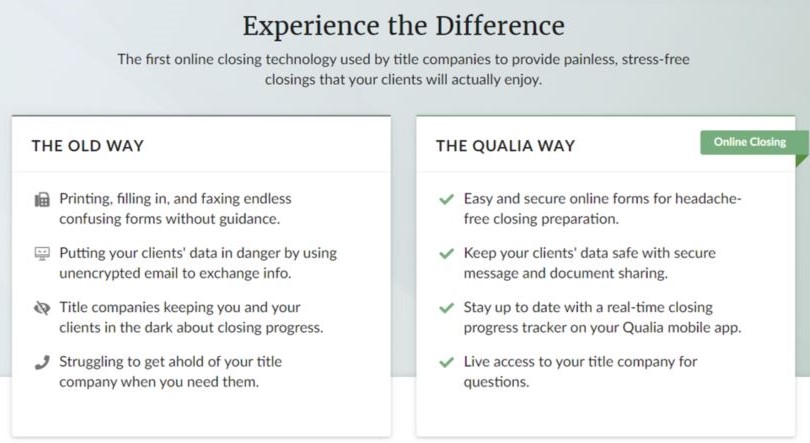
More and more providers are entering the financing market. In addition to banks and insurance companies, pension funds and private equity firms are now also entering the market. These institutions offer a combination of brokerage and financing solutions, guarantee fixed purchase prices, or provide bridge financing so that buyers can purchase a new home even before Sales of their old one. 
In the future, more and more buildings will be planned and constructed digitally: They will send data and make decisions. This will not only save energy and manpower, it will also make it possible to intervene in the building at certain points during conversions and renovations.
Currently, online marketplaces are sufficient for residential property sales. This will change, allowing commercial properties, hotels, shopping centers, and the like to be sold through online marketplaces as well. The focus here is on the major real estate brokerage firms (JLL, CBRE, etc.), which still prefer to conduct their brokerage business on their own platforms and marketing channels rather than through marketplaces. Given the sharp decline in margins, the digitization of commercial real estate sales via marketplaces is foreseeable. 
Blockchain technology is particularly well suited to the unbureaucratic administration of the owners of land charges and the transfer of titles to new mortgagees. Blockchain never forgets and may mean that land registers will no longer be needed. The technology will be used more quickly in America than in Switzerland, as land purchases in the USA can already be processed completely digitally today.
Marketplaces will expand their business model, which is currently still based on an advertising platform. They are already attacking brokers’ commissions. They also want to earn money by brokering financing, insurance, relocation services and other services. Marketplaces are thus mutating into service providers that are trying to displace traditional estate agents. They want to get closer to the transaction with the aim of processing more of the transactions. 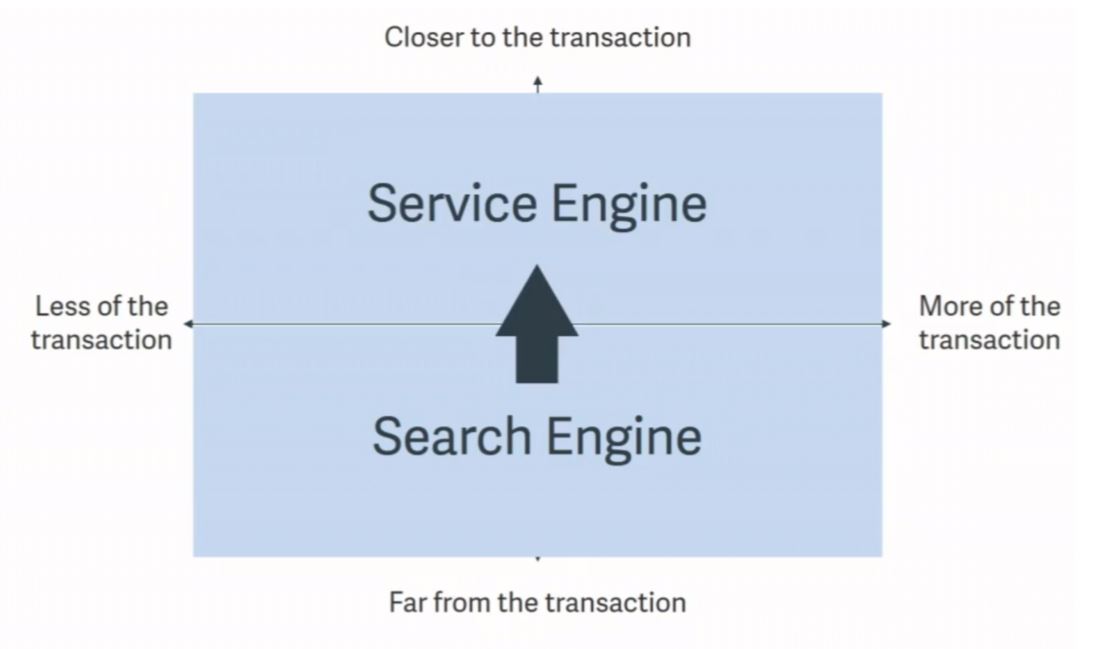
The great added value of the marketplaces no longer lies in the (rising) listing costs, but in the high brokerage fees, which in the USA still account for 6-7% of the purchase price. Disruptively, the marketplaces want to participate in the commissions of traditional brokers or replace them outright. But other sources of transaction costs such as insurance, mortgages, relocation costs, etc. are also being tapped into. 
iBuyers are investors who use hedonic property valuations and other technologies to place quick offers on properties that have been put on the market too cheaply and distressed sales, complete purchases within a few days and then sell the properties again.
The iBuyers usually carry out minor repairs and maintenance work, put the property back online after a few weeks and sell it at a profit of 4-8%. The key to the business model is to buy as many properties as quickly as possible and resell them at a higher price.
In America, companies for iBuyer programs are financed to the tune of billions. Zillow, Open Door and Offerpad are currently the leading companies in the iBuyer market. The iBuyers still have a small market share of 0.2% nationwide; in some regions such as Phoenix, for example, the market share is already 5%. The average purchase price is around USD 250-300,000. 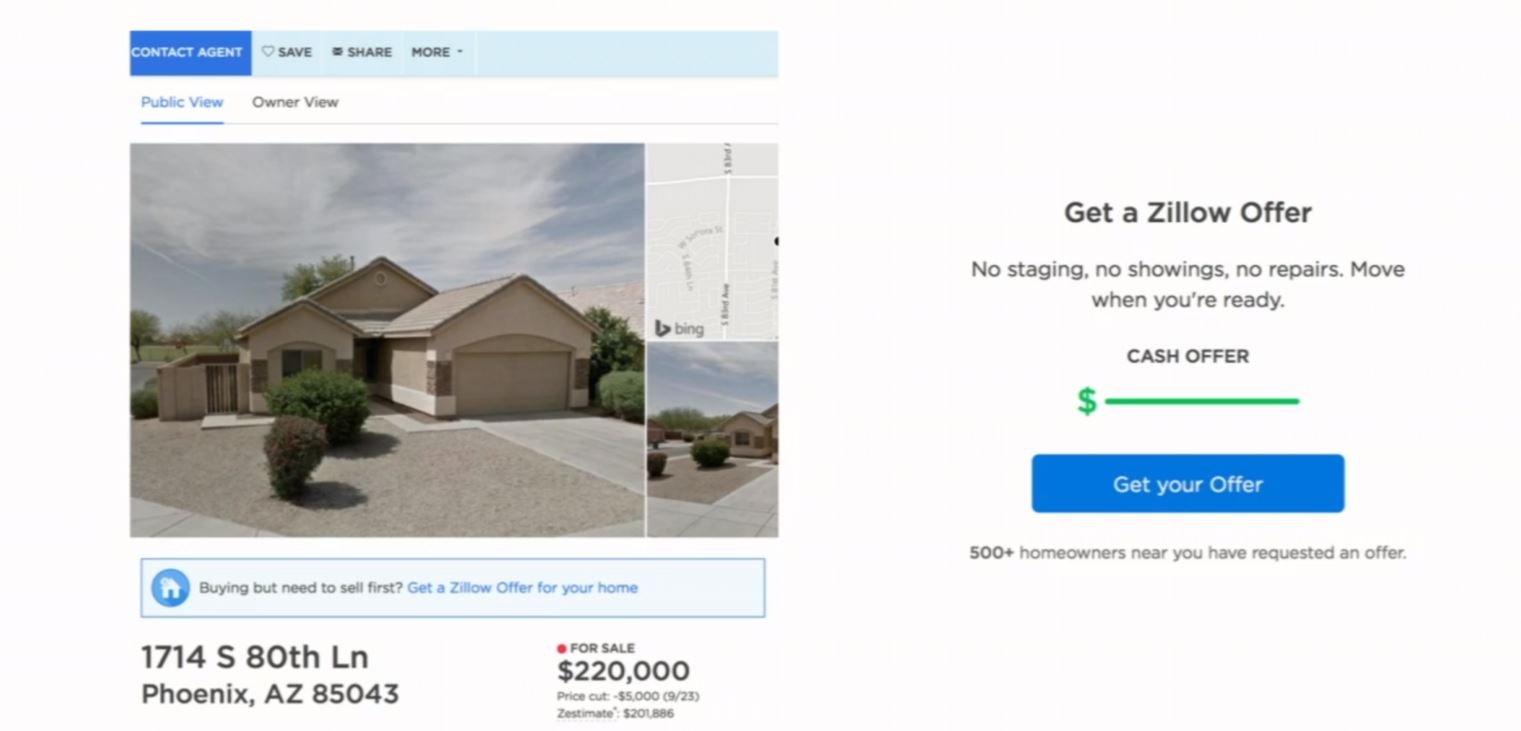
The activities of the largest American internet marketplace Zillow are exciting. The company offered 20,000 homeowners the opportunity to buy their property, but only 200 bought. Zillow was then able to generate 19,800 leads with the iBuyer program, which it was able to offer to other brokers as potential seller leads. Here, too, the focus is on disruptive business models (brokering the lead with participation in the broker’s margin). 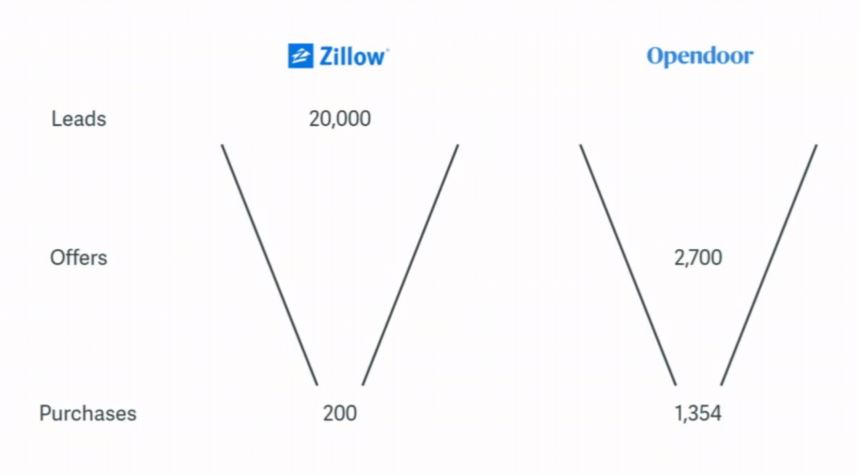
In the USA, the companies Purple Bricks, Redfin and Compass are being financed with billions in order to attack or wipe out traditional brokers.
Compass has raised over a billion from its investors (e.g. Softbank, Bain Capital and Goldman Sachs). They are buying up competitors, investing heavily in technology and creating a broker-friendly platform. Opponents accuse Compass of luring high-performance brokers with low fee share programs and high sign-on bonuses. The aim is to eradicate the traditional broker guild; thanks to the holistic IT platform, the value chain of real estate services is to be better utilized.
Purple Bricks and Redfin work with fixed transaction fees and in some cases no guarantee of success, meaning that costs are incurred in each case depending on the market and country. Both companies are still making large losses as a result of their expansion strategy, and the question is how long investors will stick with them. Purple Bricks recently saw the departure of its CEO as a result of disappointing business figures. In the USA, the business model is also on the brink of collapse: a commission model is being examined.
Axel Springer, a German media company, has invested USD 177 million in Purple Bricks. In Germany, Axel Springer and Purple Bricks are participating in Homeday with EUR 20 million. It can be assumed that Purple Bricks is planning a major market entry in Germany via Homeday and possibly other start-ups (e.g. Maklaro). Axel Springer also has digital partnerships with Ringier in Switzerland (e.g. Admeira AG), which in turn has a 50% stake in Immoscout AG.
A few Purple Bricks knockoffs have also already gained a foothold in Switzerland. They require an upfront payment and offer brokerage services at a fixed price. These business models are based on selling services without having to be successful. If such a company acquires five Sales mandates at CHF 7,000 each, it collects CHF 35,000 in revenue upfront. If just one property is successfully brokered, the transaction generates a commission of CHF 35,000. Given an average Swiss home price of CHF 700,000–800,000, that amounts to 4–5% per successful transaction.

How to ventilate properly – now more important than ever
Reading time: 3 min

Retirement in the right home: making the dream come true
Reading time: 4 min

Housing for the Elderly: Recognizing Fears, Seizing Opportunities
Reading time: 7 min
Tiny Houses in Zurich’s Seefeld: Small Spaces, Urban Living
Reading time: 2 min