Your personal search profile
Receive the real estate offers you are looking for before they are even on the market.

Rent out
Date
7.4.2017
Share
INITIAL SITUATION AND QUESTIONS
The three sisters A, B and C inherited the property on X-Strasse in Zurich in 2002 and, as condominium owners, have since formed the “Condominium Owners Association X-Strasse”.
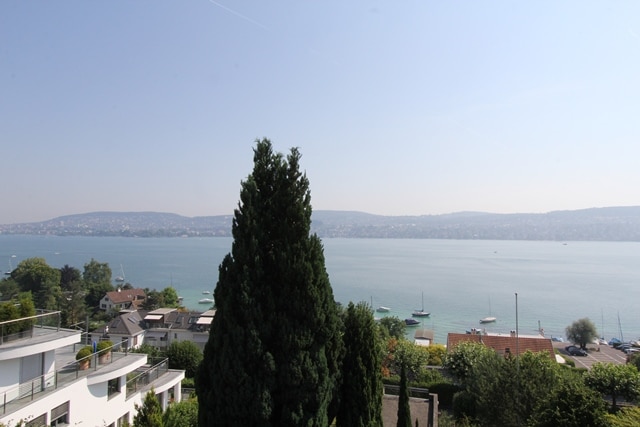
The division of the property into condominiums was already carried out by its legal predecessor in 1988. In addition, an easement had already been entered in the land register since 1925, to the detriment of the (not directly) neighboring property to the south, which has been owned by Y since 2009. According to the wording of this easement2 , trees and shrubs on the Y’s property may not exceed a height of 5 meters. The subject of the dispute was an approximately 80-year-old pine tree with a height of approximately 30 meters and a 90-year-old birch tree with a height of approximately 20 meters standing on Y’s property. The pine tree was very prominent and clearly towered over the roofs of the houses and other trees in the immediate vicinity, almost completely obscuring the view of Lake Zurich. The “condominium owners’ association X-Strasse” filed a lawsuit against Y in 2014 and demanded that he cut back these two trees to the maximum height of 5 meters permitted under the easement. Until then, neither the three sisters nor their legal predecessors had ever requested that the two trees be pruned; nor had the trees been pruned since Y. purchased the property encumbered with the said easement.
In the court proceedings, which went through the cantonal instances without agreement, the defendant Y disputed the legitimacy of the plaintiff “Condominium Owners’ Association X-Strasse”. He also argued that the easement was no longer valid anyway for various reasons. In particular, Y asserted the implied revocation or unilateral waiver of the said easement. He also pointed out the discrepancy between the land register entry and the actual situation, which is why the current condominium owners should not have relied on the said land register entry in good faith anyway.
THE STWE COMMUNITY’S RIGHT TO SUE
First of all, the Federal Supreme Court dealt with Y’s allegation that the “condominium owners’ association X-Strasse” could not have sued for the pruning of the two trees in the first place, but rather that the three sisters as condominium owners should have demanded this jointly. Pursuant to Art. 7121 para. 1 ZGB, this legal community of condominium owners enjoys a certain degree of independence.
This means that the condominium owners’ association has the capacity to act under civil law within the scope of its management activities and can sue and operate as well as be sued and operated under its name. The condominium owners’ association then decrees in accordance with Art. 71 21 para. 2 of the Swiss Civil Code (ZGB) on special assets that are independent in legal transactions. According to the Federal Supreme Court, however, the property (organized as a condominium) is not part of these common assets because it does not serve the common administration as such, but rather is only an occasion for the condominium owners’ association.
The Federal Supreme Court also stated with reference to Art. 730 para. 2 ZGB makes it clear that the condominium owners’ association as such is not entitled to an easement, especially since easements only exist in favor of the current owners of the entitled property. In the present case, the Federal Supreme Court ruled (and did not consider the decision of the Zurich High Court to be arbitrary4) that the enforcement of the present planting restriction was subject to joint administration pursuant to Art. 712g et seq. ZGB and therefore the condominium owners’ association (and not the condominium owners jointly) had the right to sue for the pruning of the two trees. The decisive factor for the Federal Supreme Court was that the properties in question were residential properties and that the easement in question served to provide light, a view and a sense of space. This benefited the condominium owners of the entitled property as a whole, and not only in subjective terms (personal well-being through better sunlight, far-sightedness, etc.>. Rather, the condominium owners – according to the explanations of the Federal Supreme Court – also potentially benefit in terms of value, as the aforementioned factors are able to influence the market value and the rental value of the individual condominium units. Furthermore, the Federal Supreme Court even accepted the argument that excessive shadows could also lead to moss growth and increased maintenance costs for the entitled property. Thus, the said easement and its enforcement serve to maintain the value of the property and are in the interest of all (and not recognizably only individual) condominium owners.
ON THE ENFORCEABILITY OF THE EASEMENT.
In the case itself, the Federal Supreme Court ruled further and also supported the decisions of the Zurich courts, according to which the condominium owners’ association was still able to enforce the content of this easement – even a good 90 years after it was entered in the land register and despite decades of accepting a situation that was contrary to the easement. It was therefore legally irrelevant for the courts that no pruning had ever been requested until the lawsuit was filed in 2014, especially as this did not change the existence and effectiveness of the easement.
NO IMPLIED WAIVER, NO RENUNCIATION
First of all, the Federal Supreme Court rejected Y’s view that the easement had been impliedly revoked. Such a waiver was not apparent, especially as there was no explicit declaration of intent and no particular behavior that would suggest a concordant expression of intent. In addition, the Federal Supreme Court supported the view of the Zurich courts, according to which years of accepting the infringement of an easement without objection could not be interpreted as a unilateral implied waiver. This is because such toleration (even over several decades and even if the plants in question have massively exceeded the permissible height for a long time) could just as well have other reasons (such as the preservation of neighborly peace). Insofar as the withdrawal is therefore implied, such implied behavior must be expressed in a clear and valid manner. This is – according to the example cited by the Federal Supreme Court – u. a. This is the case if the owner of a property entitled to an easement permits a building on the neighboring property that is contrary to the easement.
NO OVERHEATING.
Furthermore, the Federal Supreme Court pointed out in its considerations that there is no legal institution of “easement lapse” recognized by doctrine or case law in Swiss law, according to which the owner of the encumbered property could invoke the mere passage of time. Rather, an easement pursuant to Art. 734 ZGB is only extinguished when it is deleted from the land register and, in other words, exists in principle for as long as it is entered in the land register. However, an easement can be effectively waived prior to deletion and thus the easement can no longer be enforced despite the entry in the land register. However, according to the Federal Supreme Court, such a waiver must be declared unconditionally and without reservation by the entitled party. In the present case, however, such an implied waiver – as already mentioned – was not apparent, and the mere passage of time is not sufficient to affirm an implied waiver of an easement.
NO NATURAL PUBLICITY
In addition, the Federal Supreme Court also rejected the Y’s allegation that the three condominium owners should have taken into account the actual physical condition of the property with the two trees, which were far too high, when they acquired the property in 2002 and should not have relied in good faith on the contradictory land register entry.
This is because the principle of natural publicity5 developed by the Federal Supreme Court a few years ago was not relevant in this case. On the contrary, the Federal Supreme Court did not consider the assessment of the Zurich courts to be arbitrary, but rather that the defendant Y had to face the question of why it did not clarify the obvious discrepancy between the registered planting restriction and the actual situation when it purchased the property in 2009, if the continued existence of the trees was so important to it.
SUMMARY AND CONCLUSIONS.
Commented by Boris Grell, Immobilia November 2016

Why it is crucial to know the current value of your property in 2026
Reading time: 3 min
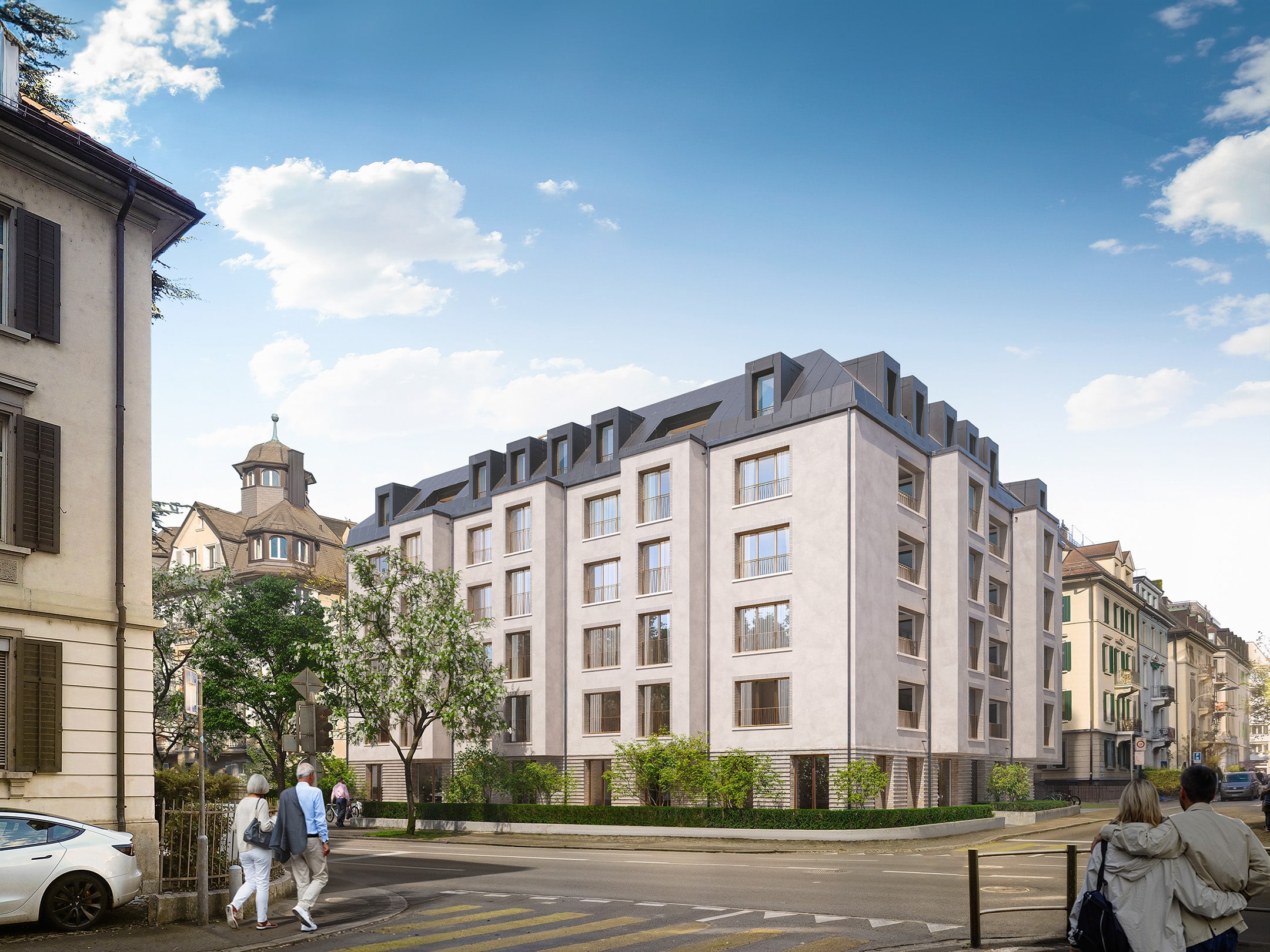
New-build rental apartments and tiny houses in Zurich Seefeld
Reading time: 2 min

A good estate agent pays off when selling real estate
Reading time: 3 min

When the house gets too big
Reading time: 3 min
We inform you about suitable properties before they are publicly offered.
"*" indicates required fields
One of the many advantages
I already have an account. To the login
"*" indicates required fields
"*" indicates required fields