Your personal search profile
Receive the real estate offers you are looking for before they are even on the market.

Rent out

Date
25.2.2017
Share
For several months now, various councils and political camps have been discussing whether the real estate industry, or at least real estate agents, should be subject to the Anti-Money Laundering Act (AMLA). In addition to this much-cited demand, it remains unclear which other market participants should be subject to this law. After all, the players in the real estate market are diverse: private individuals, institutional sellers, real estate agents, consultants, wills and executors, lawyers, notaries, advisors and authorities, project developers, building contractors, architects, banks and insurance companies trade in real estate or are involved in real estate transactions as intermediaries, buyers and sellers. We would like to provide an overview of the topic and highlight the advantages and disadvantages of additional regulation.
The law is intended to prevent money from criminal backgrounds flowing into the economy. In principle, financial intermediaries such as banks and insurance companies are required to carefully check the economic origin of the funds. Money that falls under the AMLA is currently defined as follows in the Money Laundering Ordinance (Art. 7ff):
There is a lack of clarity regarding foreign, non-criminal assets in Switzerland that are not taxed abroad (illicit assets). Today, these assets are not covered by the current AMLA. There are no current studies, facts or evidence that such funds are systematically entering the Swiss real estate market on a large scale. In most cases, a real estate purchase with such funds would mainly involve a change in the investment purpose, but not the import of problematic funds. Will foreign countries regard such funds as criminal in the future? The current domestic discussion about tightening the AMLA and the inclusion of parts or even the entire real estate sector, as hoped for by some circles, is not currently aimed at untaxed funds in the countries of origin.
Recently, there have also been calls from the state for a revision of the current AMLA. The current laws are no longer fit for purpose, as organized crime has evolved. The current provisions are no longer effective enough in preventing criminals from laundering money.
Reason no. 1
In principle, large sums of money are constantly flowing into Switzerland for various reasons (security, taxes, etc.). These are initially deposited with banks and insurance companies. If these fail to meet their obligations after checking the origin, money of criminal origin could also flow into the real estate market. The real estate market offers no further protective filter in the event that criminal money is able to enter the financial intermediary circuit.
Reason no. 2
The financial centers are already very well regulated. Investors with money of criminal origin avoid these financial centers. They try to invest their money in alternative markets. There is no certainty about these alleged money flows. Proponents of the AMLA consider the following markets to be at risk in addition to the real estate market: commodities trading, diamond and gemstone trading, the art market, the hotel industry and gastronomy. There is no evidence that structured money laundering is taking place in these markets in Switzerland. Individual cases should not speak for a market structure. Advocates are going for the sweeping blow and would prefer to subject all parties that come into contact with large assets to the AMLA. In addition to the real estate market, jewelers, gallery owners and commodity traders would suddenly be in the spotlight. The question therefore arises as to where the line should be drawn and what means are available to the intermediary to check the economic background of client assets.
Reason no. 3
A MLA audit requirement could also have advantages for the real estate industry. The new obligations of market participants create a new barrier that prevents unqualified players from entering the market. Today, any newcomer can operate and do business in the real estate market without much prior knowledge. Qualified and reputable real estate professionals are only too happy to wish for an additional market barrier so that in future not just anyone can call themselves a “real estate professional” or “real estate agent” without the appropriate training. In countries such as the USA or the UK, only certified, trained professionals have access to a regulated market. This creates trust and ensures that real estate transactions are only handled by professionals. They would be trained in money laundering legislation and would vouch for proper handling in this respect. Occasional estate agents and private sellers would then no longer be able to act as market participants without qualifications.
Reason no. 1
Almost 100% of the funds for Swiss real estate purchases flow into the market via domestic banks or insurance companies, even if the buyer does not need a mortgage. Through the AMLA, the legislator has introduced a system that already functions like a protective ring for financial market participants. This ring protects all parties involved from coming into contact with funds of unknown origin.
Reason no. 2
Cash transactions would have to be checked for money laundering. A ban on cash payments for real estate could simply and unbureaucratically prevent the unknown, but probably insignificant number of cash payments for real estate sales. The funds for the purchase would then have to flow through a financial institution controlled by the AMLA.
Reason no. 3
All real estate market participants (banks, lawyers, notaries, estate agents) confirm in surveys that little to no sales are made with cash today. Moreover, if there is a well-founded suspicion of money laundering, any player could already make a report to the prosecution authorities.
Reason no. 4
Buying a property does not mean that money has been laundered. It would only be back in circulation when it is sold. In the event of a cash purchase ban, the money flows back into the regulated financial market. The latter reports suspicious cases and checks the origin of the money when it is received.
Reason no. 5
If money laundering is suspected, the state can now immediately arrange for a restriction on the sale of the property in question to be entered in the land register. The monetary assets are thus blocked much more effectively than if a seizure is made on a bank account – money has feet and can be transferred from one bank to another within a few minutes. Real estate is immovable and cannot run away.
Reason no. 6
Opponents argue that money laundering leads to high real estate prices and market distortions. This argument has not been substantiated. A few sensational transactions (see under “Curiosities”) with a possible money laundering background are repeatedly used to support this claim. These few transactions do not reflect the market, nor do they generally drive up prices. Rather, tax, economic and political factors are responsible for the current high real estate prices.
Reason no. 7
Real estate agents ask themselves how their clients should be checked under the AMLA. This is because estate agents do not normally know the financial circumstances of buyers and rarely play an active role in real estate financing. In contrast to banks, the purchase of real estate is a one-off transaction between two unknown parties. While private notaries in some cantons intervene in the cash flow and direct it, estate agents have no insight into or power of disposal over the cash flows. It is also completely unclear how brokers can check the funds used in accordance with the AMLA. In contrast to banks, which look after and know their customers for years, this is a short-lived customer relationship that usually ends after the purchase.
Reason no. 8
As real estate agents in Switzerland only handle an estimated 30 – 50 % of all real estate transactions, the MLA subordination of real estate agents would not be effective. In addition to estate agents, project developers, property managers, consultants, architects, general contractors, private individuals, etc. also sell properties. properties. An AMLA obligation only for brokers would encourage them to take on other roles in the transaction. The entire real estate industry with all its players and legal transactions should correctly be covered by the law, i.e. all real estate transactions including inheritances and gifts.
Reason no. 9
Real estate professionals ask themselves incredulously why they of all people should be subject to the law. Reference is made to other sectors where cash transactions are the order of the day to settle a bill. In the art market,
Reason no. 10
The cost/benefit ratio for an MLA obligation for the real estate market seems unclear at the moment and should be critically questioned. Who pays for these additional investigations? How much financial effort is required for how few suspected cases? Is the Swiss real estate market effectively a magnet for dirty money? What evidence is there to support this theory? Are the currently known suspicious cases the tip of the iceberg or the only known cases? Legislators should consider carefully (and base their decision on facts) whether they are actually trying to solve a problem here or whether they are creating administrative hurdles for a market that is actually functioning well.
The fact that, unlike the financial market, there is (still) no market supervision for the real estate market is problematic. Since real estate can be traded less quickly and the instrument of land register blocking is very effective, such an institution will not necessarily be necessary in the future. The discussion about the inclusion of the real estate industry or other economic sectors not currently subject to the AMLA can only take place with consistent and effective enforcement of the controls and investigations of the institutions already subject to the AMLA. If the AMLA is also to be applied to the real estate market in the future, it is to be hoped that the Swiss Real Estate Industry Association (SVIT) will play a leading role in the examination of real estate transactions. Care must also be taken to ensure that any provisions are applied equally to all market participants and that no professions are disadvantaged.
Apparently there is an often-cited case of a property purchase on Lake Geneva. A son-in-law of the Kazakh president purchased a property at a very high price. However, it is not known whether the purchase was paid for in cash. It must be assumed that the sum of several dozen million was not paid with suitcases full of money. Likewise, the facts of money laundering (in the purchase of the property) have not yet been proven or established. Clarifications are currently underway as to whether the funds used are subject to the MLA and whether this is a case of money laundering. The property will probably already be subject to a restriction on sale until the case has been legally clarified.
Author: Claude Ginesta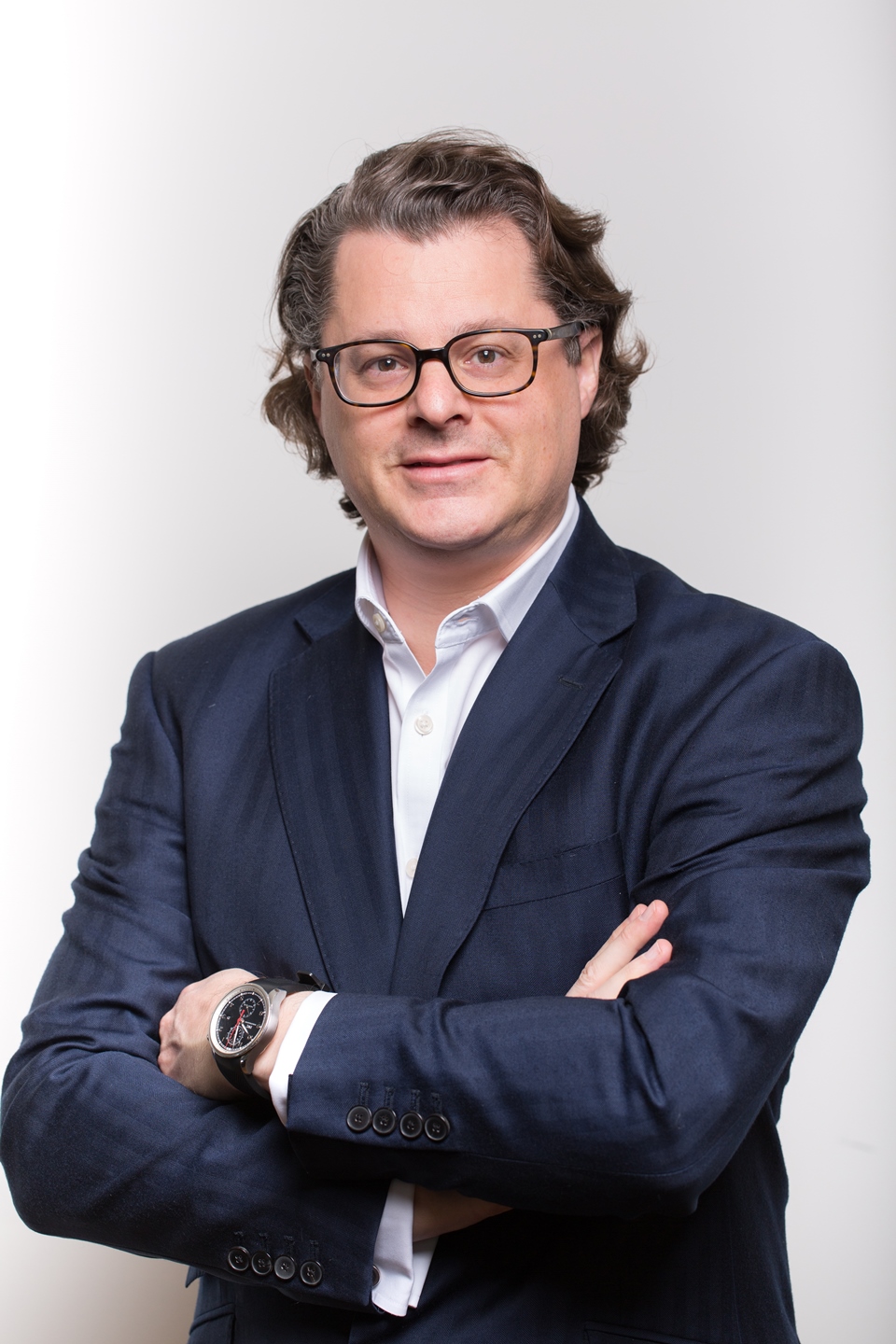
Claude A. Ginesta is a federally certified real estate trustee and CEO / owner of Ginesta Immobilien AG. The company was founded in 1944 and specializes in the sale of real estate in the economic area of Zurich and Graubünden. With branches in Küsnacht, Horgen and Chur, the company acts as an estate agent throughout Switzerland for properties with a supra-regional character.
Publisher of the Illusions series: Ginesta Immobilien AG, www.ginesta.ch

Why it is crucial to know the current value of your property in 2026
Reading time: 3 min
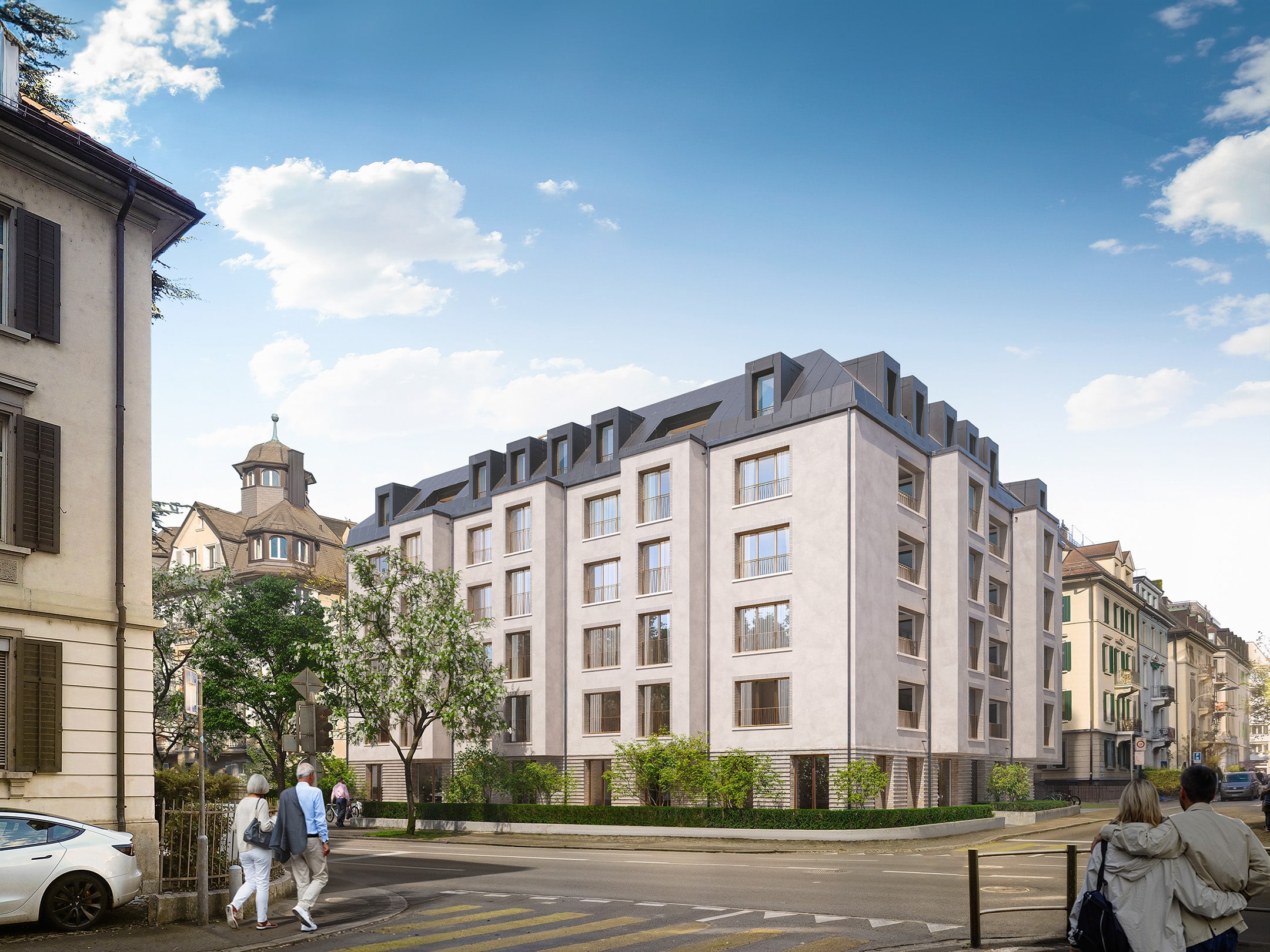
New-build rental apartments and tiny houses in Zurich Seefeld
Reading time: 2 min

A good estate agent pays off when selling real estate
Reading time: 3 min

When the house gets too big
Reading time: 3 min
We inform you about suitable properties before they are publicly offered.
"*" indicates required fields
One of the many advantages
I already have an account. To the login
"*" indicates required fields
"*" indicates required fields