Your personal search profile
Receive the real estate offers you are looking for before they are even on the market.

Rent out
Date
31.3.2017
Share
1. we need our living space – use of newly created living space / net migration to Switzerland
Switzerland continues to have positive net migration, i.e. more people immigrate to Switzerland than emigrate. Certain sectors of the economy are downright dependent on foreign skilled workers migrating to Switzerland. Furthermore, many wealthy Europeans are still settling in Switzerland for various reasons – primarily security and taxes. These people need living space, which is very limited in Switzerland.
Together with population growth (more and more single households) and the trend towards more living space per inhabitant, this forms the basis for a very robust demand for real estate. The newly constructed properties are finding buyers, which is also referred to in the jargon as “take-up”.
2. we can afford it (at the moment) – the Housing Affordability Index as a key metric
The Housing Affordability Index (HAI) shows how much of disposable income is needed for housing purposes. The index is also used by banks to regulate the affordability of mortgages. Normally, no more than 33% of income may be used for housing. According to a study by Credit Suisse Economic Research, the HAI is currently at a low 20 – 25 %. Moreover, according to this study, almost 80 % of mortgages are fixed. This means that the market is hedged against interest rate increases over a longer period of time: The HAI will not rise sharply overnight even if interest rates rise. According to the study, it can be assumed that the HAI will exceed the golden financing rule of 33 % disposable income for housing from an interest rate level of 4.5 %. The HAI is influenced by two parameters: interest costs and disposable income. The index is currently so low because incomes in Switzerland have developed well despite the financial crisis. At the same time, interest costs have fallen and have remained at historic lows for some time. However, this can change quickly if disposable income falls (e.g. increase in unemployment).
In the USA, the HAI was around 50% when the real estate bubble burst there. The Americans had speculated that they would be able to repay the defaulting bank interest by increasing the value of the properties and thus selling them at a profit. This speculation turned out to be wrong and ultimately led to the collapse.
3. there is little speculation in the Swiss real estate market
Real estate markets often suffer from a major wave of speculation that precedes a market crisis. In the USA, shortly before the real estate speculation bubble burst, everyone acted as a middleman. Real estate buyers were also people who were persuaded by shady estate agents and mortgage sellers to buy without investing money in a “safe investment”. These buyers had neither a housing need nor any idea of the investment. Greedy real estate developers also created the supposed supply of this speculative demand. In Spain too, with the help of corruption, incorrect market assessment and the benevolent help of careless banks, real estate was created that could neither satisfy a need nor reflect a buyer’s need. The example of Dubai shows the pinnacle of speculation. Here the properties changed hands three to four times during the construction phase, each time with a tax-free profit.
Fortunately, the Swiss real estate market is not based on such wild speculation. It is true that market players are also speculating on rising prices, especially promotional companies that are planning new condominiums and have these projects on their books for up to three years at a time. However, the projects can only be completed once half or two thirds of the apartments have been sold. This is where the credit-financing banks put a stop to projects being started at this stage.
Property gains tax is progressive in most cantons for the short-term holding of real estate; speculation with existing properties is not worthwhile in the short term. If you do so anyway, you will quickly be taxed as a professional real estate trader if you trade in real estate. This entails additional tax problems (direct federal taxes and AHV), which is often a nightmare for speculators. In some cantons, the profit taxes even exceed the speculative profit if the property is held for a short period.
4 The Swiss economy is robust
The Swiss economy has coped relatively well with the financial crisis. This is also reflected in the current strength of the Swiss franc, which stands for the efficiency and security of the economy. As significant assets of an economy are tied up in the real estate market, a real estate market crisis is often the trigger for an overall economic crisis. According to the Credit Suisse study, the share of private loans in GDP has risen from around 70 % (1997) to over 100 %. At the same time, the home ownership rate has risen from around 33% to 40% today. This increase partly explains the expansion of the credit volume in Switzerland. However, a large mortgage market makes the economy more dependent on interest rate fluctuations.
Our market forecast (2011)
As real estate agents, we are not prophets. Nevertheless, we would like to make a few comments on the current market and a forecast for the future development of the Swiss real estate market:
In the USA, the real estate industry was very important before the crisis, accounting for 6.3 % of gross domestic product (GDP). After the real estate bubble burst, economic output and thus the importance of the real estate industry fell to 2.4 % of GDP.
According to the Swiss National Bank, in 2005 the construction industry accounted for around 6% of total economic value added and around 9% of employment. The facts relating to the size of the building stock are more impressive. In 2005, the value of the entire building stock amounted to around CHF 800 billion and thus accounted for around 60 % of Switzerland’s total capital stock. The real estate market can implode due to problems of its own making. However, external factors can also have a negative impact on the real estate market or, if a bubble exists, cause it to burst. These include unemployment, a currency that is too strong, falling wages and assets or new taxes. At the moment, there are few signs in Switzerland that external factors pose an acute threat to the real estate market. Only the adoption of the tax justice initiative at the end of November 2010 would probably have a negative impact on the prices of very luxurious properties and the further settlement of rich foreigners in Switzerland.
C O N T R A P U N C T
The Swiss National Bank warns of a possible real estate bubble
In various reports, the National Bank has warned of developments on the real estate market. On the one hand, it has analyzed the market, but has also conducted interviews with banks. The following is a brief summary of the most important statements on the real estate market made by Mr. Philipp M. Hildebrand on 28 October 2010 during a speech in Ticino:
In summary, the SNB’s warning relates primarily to the mortgage market and notes that the rules set by the banks do not always appear to be adhered to. If this is really the case, the warnings are understandable. An overly expansive monetary policy on the part of the SNB combined with an expansive lending policy on the part of the banks is an explosive mixture and can quickly lead to a market imbalance if interest rates rise.
5 The market is intact – supply and demand determine prices
In the USA, the market has been completely inefficient since the real estate bubble burst. The banks do not trust the market and no longer provide financing. As a result, the low demand is being nipped in the bud by the banks. The many forced sales, which account for up to 40% of all sales, further expand the supply side and lead to a threatening price instability. Breaking out of such a spiral is not an easy task and is likely to take some time. A similar situation was observed in Switzerland after the real estate bubble burst in the early 1990s. Although we have had an intact market in Switzerland for some time now, both in terms of demand and supply, this can change quickly.
After the end of the dotcom bubble in 2001 and at the beginning of the financial crisis in 2009 (2nd quarter), deflationary tendencies were noticeable among buyers in the market. They speculated on falling real estate prices. Fortunately, the real estate market was able to recover, but it was noticeable how little it takes for home buyers to emotionally weigh up their purchase decisions and postpone them in the face of supposedly falling prices.
Author: Claude Ginesta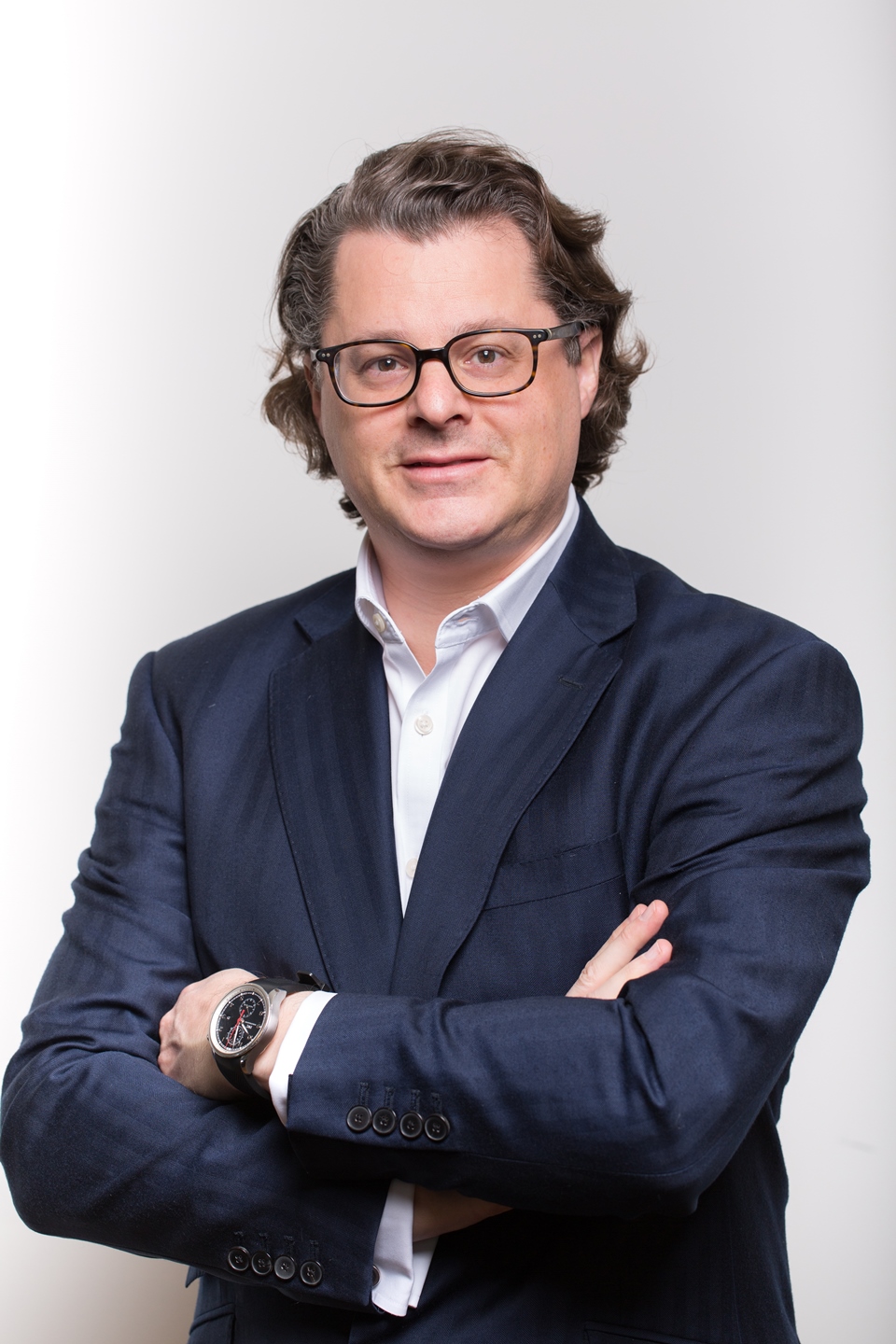
Claude A. Ginesta is a Swiss certified real estate trustee and CEO / owner of Ginesta Immobilien AG.
The company was founded in 1944 and specializes in the sale of real estate in the economic region of Zurich and Graubünden. With branches in Küsnacht, Horgen and Chur, the company acts as an estate agent throughout Switzerland for properties with a supra-regional character.
Publisher of the Illusions series Ginesta Immobilien AG, www.ginesta.ch

Why it is crucial to know the current value of your property in 2026
Reading time: 3 min
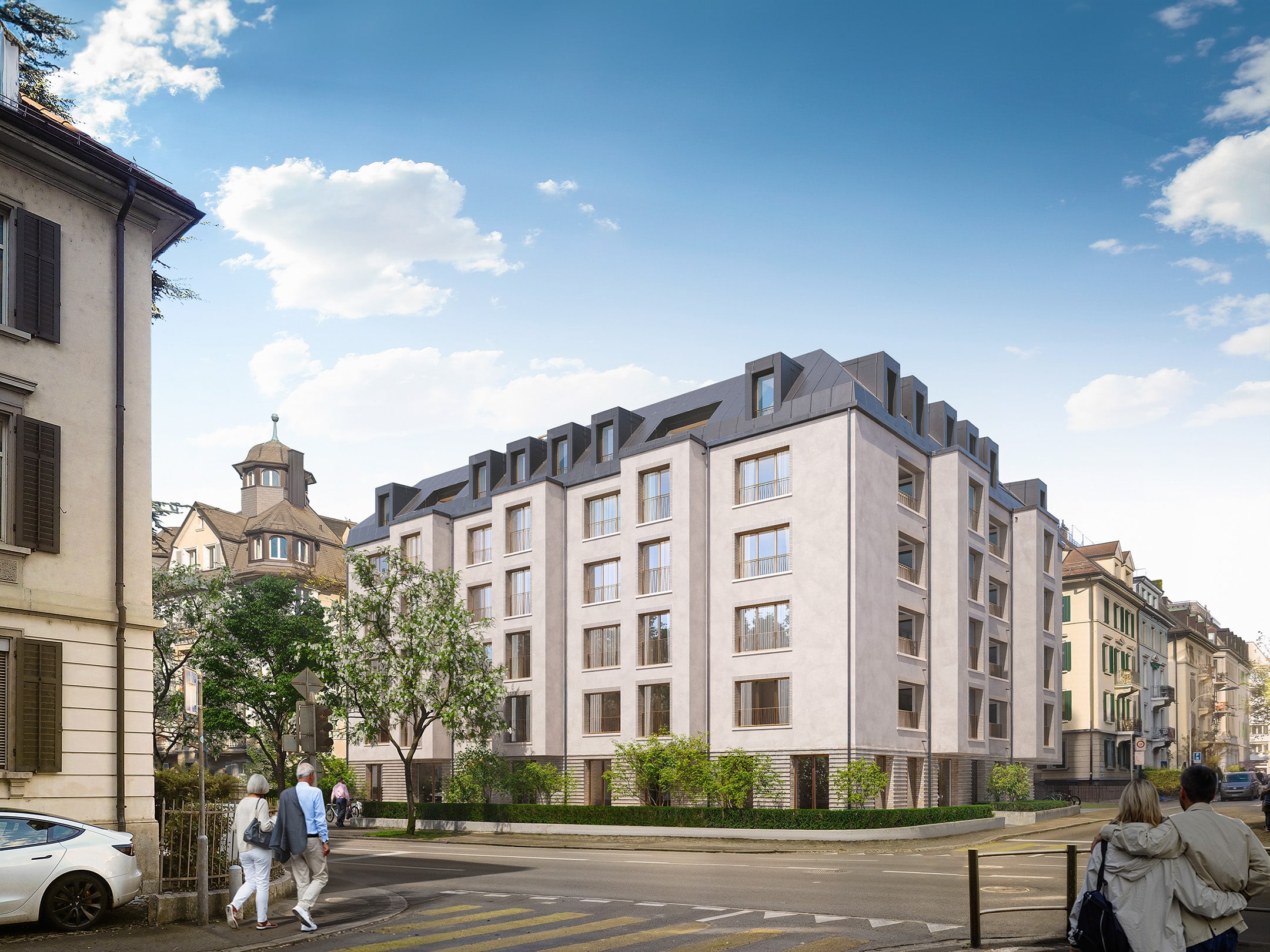
New-build rental apartments and tiny houses in Zurich Seefeld
Reading time: 2 min
A good estate agent pays off when selling real estate
Reading time: 3 min

When the house gets too big
Reading time: 3 min
We inform you about suitable properties before they are publicly offered.
"*" indicates required fields
One of the many advantages
I already have an account. To the login
"*" indicates required fields
"*" indicates required fields