Your personal search profile
Receive the real estate offers you are looking for before they are even on the market.

Rent out

Date
25.11.2019
Share
Approved preliminary request
The dispute concerned two plots of land and a narrow third plot on the edge of the forest that was not suitable for building on. In 2013, the owner at the time presented a project with two apartment buildings to the municipality, which envisaged a transfer of building mass from the forest plot to the other two plots. With regard to a sale, it asked the municipality for a binding preliminary decision on the transfer of the building stock, which was granted except for the planned staircase shared by the two buildings.
Building mass transfer limited to 20 percent
The building land has now been sold and the new owner has had a project drawn up that envisages two separate staircases instead of the objectionable common staircase. However, the municipality refused the building permit and justified its rejection with the planned building mass transfer of 30 percent: the concentration of the building fabric was to be avoided in order to prevent an aesthetically disruptive structural wall between the neighboring residential buildings and the forest – usually the authority does not allow more than 20 percent building mass transfer.
Encroachment on freedom of ownership
Following negative rulings by the Canton of Zurich Building Appeals Court and later the Cantonal Administrative Court, the Federal Supreme Court also came to the conclusion that the Meilem building authorities had overstepped the mark. Even if there is a public interest in the economical use of the land and thus the utilization of the maximum building mass (see BGE 142 II 100 E.4.6), aesthetic justifications for a reduction in building mass would only apply if public interests of greater importance, such as monument protection, came into play(BGE 101 Ia 223 E. 6c). The Federal Court was not convinced by the fact that the planned buildings appeared too bulky, did not fit into the surroundings and would also overuse the area, as the building authorities argued: the planned buildings would blend harmoniously into the settlement area. According to the highest court, the refusal of planning permission on the grounds of an excessive transfer of building mass is a disproportionate encroachment on freedom of ownership.
The client was represented by the renowned construction lawyer Felix Huber, who is regarded as an absolute specialist in public and private construction law.
What does building mass mean?
The building mass is the sum of all above-ground volumes of a building that are used for residential purposes. An additional building mass figure is usually available for ancillary rooms (e.g. garage).
What does mass transfer mean?
A building mass transfer is when the possible building mass of one property is transferred to another under certain conditions. In general, the building mass can only be transferred in the same building zone. In addition, the recipient’s property must be within a reasonable distance. A building mass transfer from Oerlikon to Albisrieden in the municipality of Zurich is not possible, despite the same building zone. There is no exact distance measurement, but a radius of approx. 300 m as the crow flies. However, the rule of thumb is not legally sound.

Why it is crucial to know the current value of your property in 2026
Reading time: 3 min
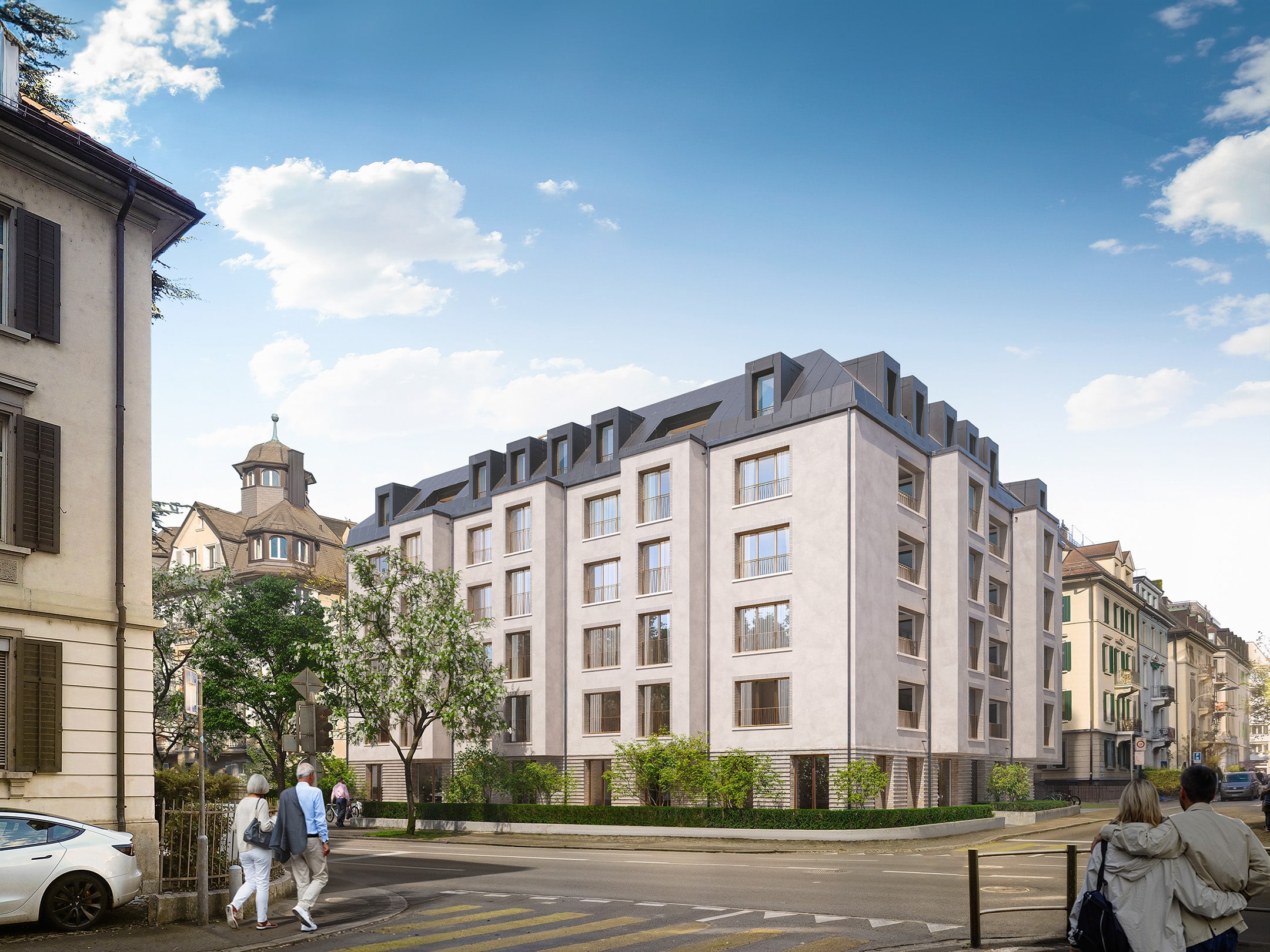
New-build rental apartments and tiny houses in Zurich Seefeld
Reading time: 2 min

A good estate agent pays off when selling real estate
Reading time: 3 min

When the house gets too big
Reading time: 3 min
We inform you about suitable properties before they are publicly offered.
"*" indicates required fields
One of the many advantages
I already have an account. To the login
"*" indicates required fields
"*" indicates required fields