Your personal search profile
Receive the real estate offers you are looking for before they are even on the market.
Rent out

Date
26.4.2023
Share
The young family wants their own property for the future with the certainty that the children will grow up in one place and be able to attend schools until they finish school. The grandparents, on the other hand, may have a property of their own and have also been able to set aside liquid assets and already know that they will no longer need them during their lifetime. It therefore makes sense to pass these funds on to the next generation as an advance withdrawal so that they can fulfill their dreams and avoid paying unnecessary interest to third parties. In short: the assets stay in the family.
But all this has a few more advantages. Parents can reduce their taxable assets and the tax burden is reduced. For the offspring, however, the taxes are insignificant compared to the equivalent value – the ability to buy a property. This tax varies from canton to canton and there are also differences within cantons. The same also applies if the parents move to another property and pass on the large family home to the next generation during their lifetime.
If there are several heirs, it is particularly important to ensure that an advance withdrawal does not violate the compulsory portions and thus cause an inheritance dispute between siblings and relatives after your death. A dispute that often leads to the advance beneficiaries having to pay back such a large share to the other heirs that they are ultimately unable to keep the property. This is because an advance inheritance does not have to be officially notarized. A written contract is not even necessary, even if it is of course recommended. A verbal agreement would be sufficient, but this does not change the fact that the compulsory portions must be taken into account in any case.
Anyone who thinks that a gift would circumvent this is wrong: In the case of financial gifts from parents to descendants, it is generally assumed that an advance withdrawal of inheritance is subject to compensation, unless the compensation obligation has been expressly waived. However, this must not violate the compulsory portion of the other heirs. If you wish to take this approach, it is highly recommended that you seek expert advice on how such a gift should be structured.
The other option for supporting descendants during their lifetime is a loan. While the money is transferred to the children’s assets in the case of an advance inheritance or gift, it remains in the parents’ assets in the case of a loan. Assets and any interest must therefore be taxed by the parents. Instead, the children can deduct the debt and interest from their taxable assets and income. Of course, a low interest rate can also reduce the burden on descendants when buying a property.
In summary, it can be said that if the parents know very clearly that they will not need all their assets to support themselves until the end of their lives, an advance inheritance is an extremely sensible way of positively influencing the well-being of their offspring when they need it most. Namely in the middle of their lives and especially when they themselves are starting a family. Buying a property also gives you the greatest possible security that the advance inheritance will remain an asset for the family.
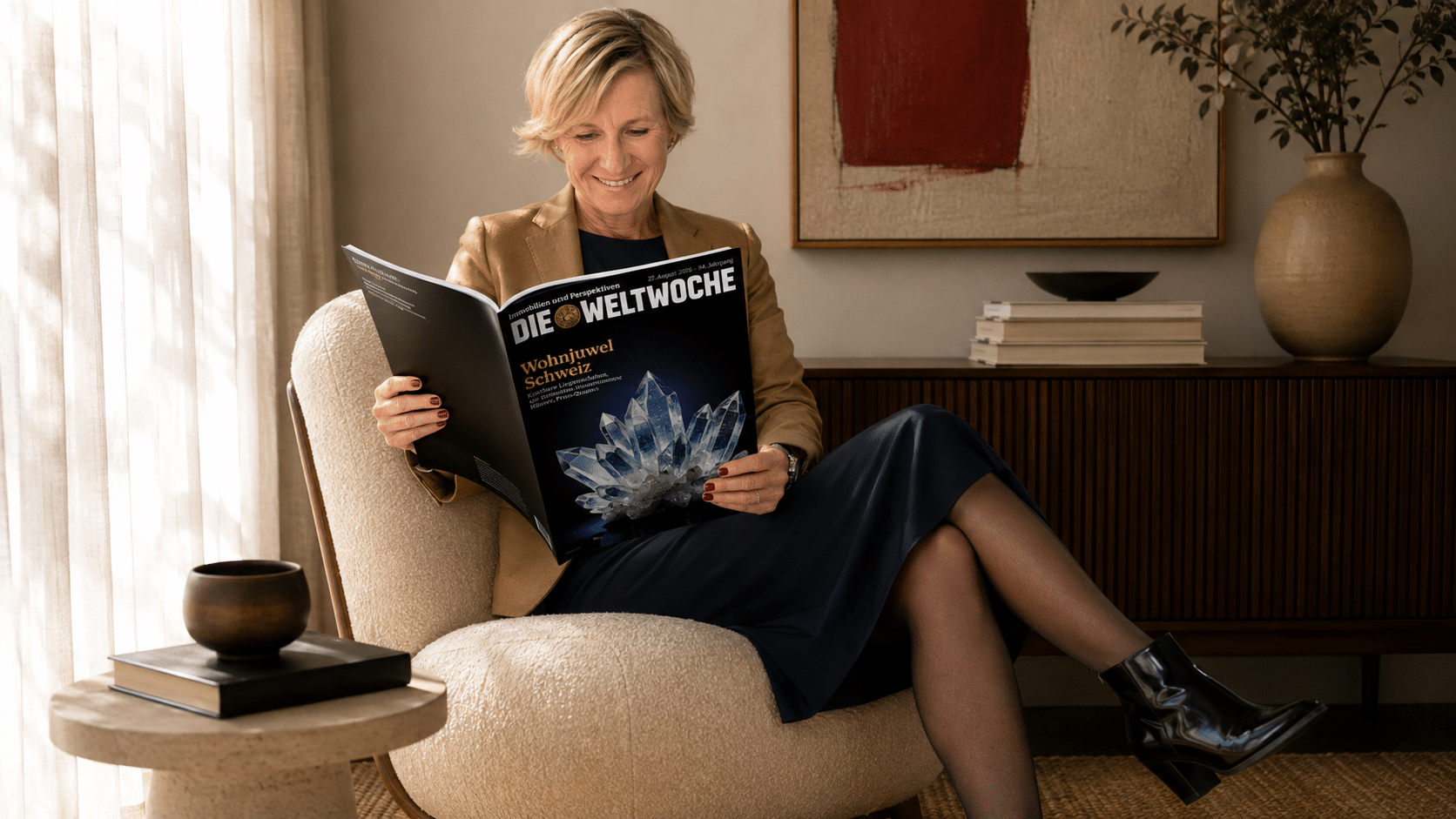
Article in *Die Weltwoche*: Interview with Katerina van der Laan, “The Swiss Are Still Very Good Buyers”
Reading time: 9 min

Davoser Zeitung, Sept. 1, 1926: Ginesta Opens New Office in Davos
Reading time: 2 min

Wellbeing@Work: Ginesta Launches New Program for Employees
Reading time: 5 min

Nadine Suter will become the site manager of Ginesta’s new location in Davos
Reading time: 6 min