Your personal search profile
Receive the real estate offers you are looking for before they are even on the market.

Rent out
Date
26.11.2020
Share
According to § 238 para. 1 PBG (Planning and Building Act of the Canton of Zurich), buildings, facilities and surroundings must be designed in such a way, both as a whole and in their individual parts, that a satisfactory overall effect is achieved; this requirement also applies to materials and colors.
It is undisputed that a building must meet certain requirements. A building must be solidly constructed so that it does not collapse. And it must meet certain noise and environmental protection requirements. These are hard factors that can be recalculated. But what exactly does it mean that a building should be integrated into its structural and landscape surroundings “in such a way that a satisfactory overall effect is achieved”? Who decides whether a project fulfills this condition?
First of all, the term “satisfactory overall effect”: In a normal context, a building does not have to be classified as “good”, “satisfactory” is sufficient. Only in certain particularly sensitive locations (such as in core zones or in the immediate vicinity of protected objects) is it permissible to demand a “good” overall effect.
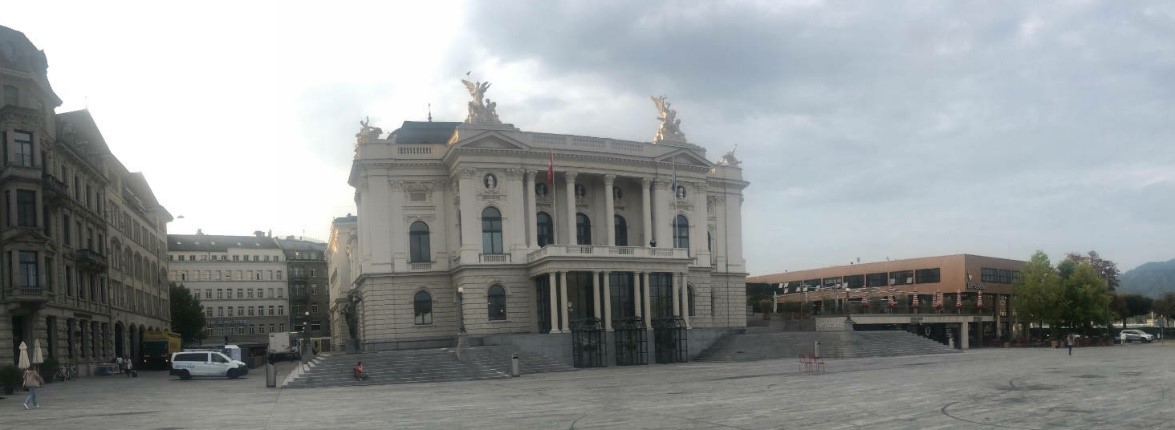
The Bernhard Theater in Zurich (right, opened in 1984): Meatloaf or a successful architectural addition next to the opera house?
The HEV Zurich writes: “Therefore, the authorities may not refuse a building permit simply because they consider a project to be in need of aesthetic improvement. Only a qualified public interest justifies a restriction of the design space. “1
In view of this legal situation, one would think that there would be a great deal of creative freedom in construction and that this would also be accompanied by great architectural diversity. However, if you look at the new buildings in Zurich and the surrounding area, you may have doubts. There is not much to be seen in the way of creative freedom, let alone great architectural designs. The term “one-size-fits-all” comes to mind. Why is that?
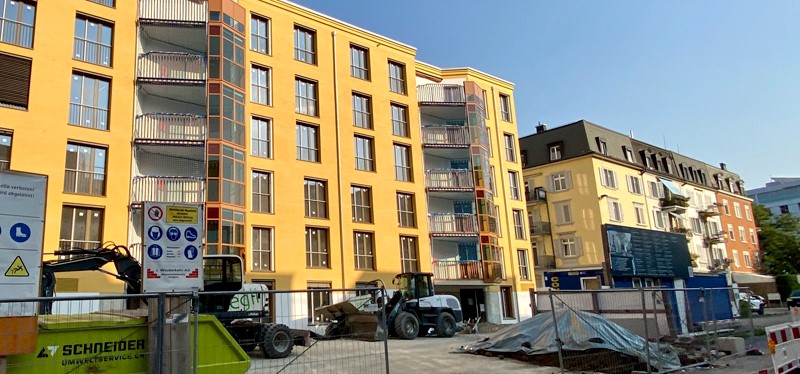 Nearing completion: new residential development at the Hornbach site. Controversial development in the immediate vicinity of the Chinagarten on Lake Zurich.
In an article from 5. January 2015, the NZZ2 describes the case of a developer who wanted to renovate a house on Weststrasse and build two new attic floors with three additional apartments. The preservation authorities waved the preliminary project through, but the desired extension was refused on the grounds that the “project would not fit in with the surrounding roofscape”. The authorities did not dispute that the client would have been entitled to two additional residential storeys due to the utilization rate.
Of course you can appeal against such decisions. But if you go through all the instances, it can be quite expensive – and possibly take quite a long time. In the Canton of Zurich, appeals are dealt with by the Building Appeals Court. The cantonal administrative court and the Federal Supreme Court in Lausanne will be the next instance. It can easily take two to three years before a final decision is reached, and the costs, not including the expenses for a lawyer, can quickly amount to at least 20,000 to 30,000 francs.
It is understandable that the client from Weststrasse decided not to appeal in view of the uncertain prospects. He reluctantly built only 11 apartments instead of the 13 planned in the original project. The fact that the much-vaunted inward densification was also neglected should not go unmentioned.
A case study by Lukas Wolfer3 shows that there is another way. This case concerned a roof terrace for which the building department of the city of Zurich refused planning permission in the first instance. As there are no special regulations for roof terraces, the construction of a roof terrace can only be refused on the basis of the “classification article” § 238 PBG. The couple concerned appealed against this decision. An on-site inspection by a consultant from the Building Appeals Commission then showed that there was no room for the general refusal of this roof terrace. The permit for a slightly redimensioned terrace was subsequently granted.
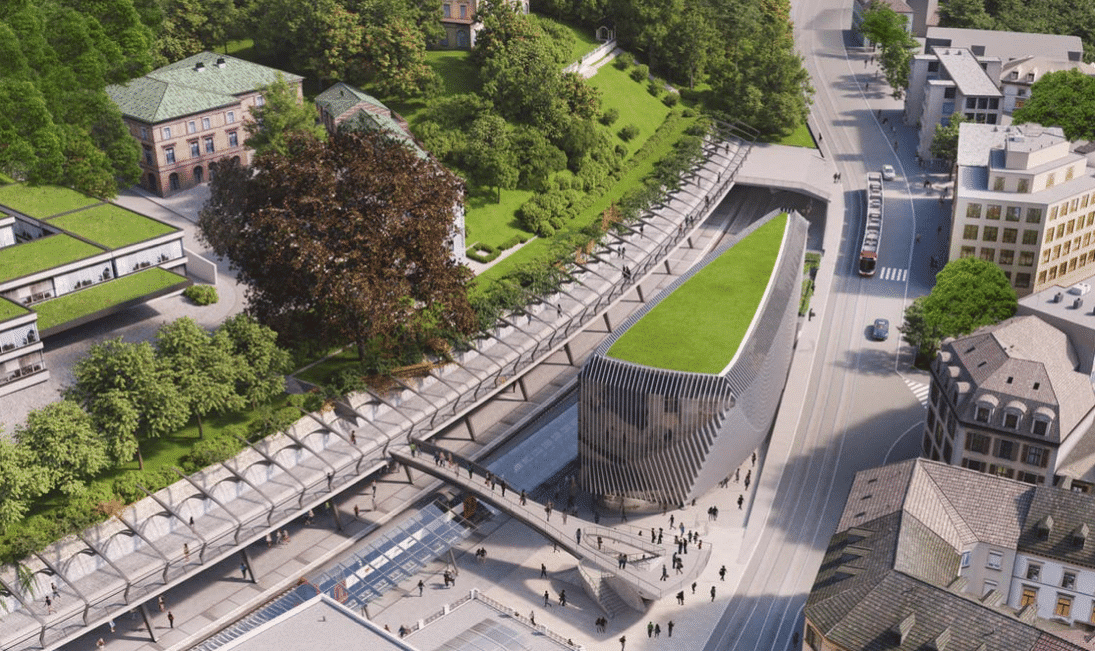
The planned construction of a new five-storey commercial building by star architect Calatrava at Stadelhofen station is of a completely different caliber in terms of its dimensions and impact on the cityscape. For some, it is an “ocean-going vessel”, while others refer to it as a “beached whale”. An appeal was also received in this case, citing the inadequate classification of the project. It stated that “the project does not fit into the surroundings and violates the requirements of monument protection “4. The court ruled: “The preservation of the individual character does not rule out the possibility that contemporary-modern designs can exist alongside traditional buildings or even represent an enrichment.” And further: “In terms of its dimensions and grain, the planned volume meets the criteria for particularly good integration into the urban context. “5 The building permit for this project was granted in August 2020, albeit with many conditions. Although the project has now even been certified by the courts as being “particularly well integrated”, there will probably never be a consensus as to whether Calatrava’s building really is “particularly well integrated” into its surroundings or not at all. The project is scheduled for completion in 2023. Soon, all interested parties will be able to take a look on site. There is plenty to discuss.
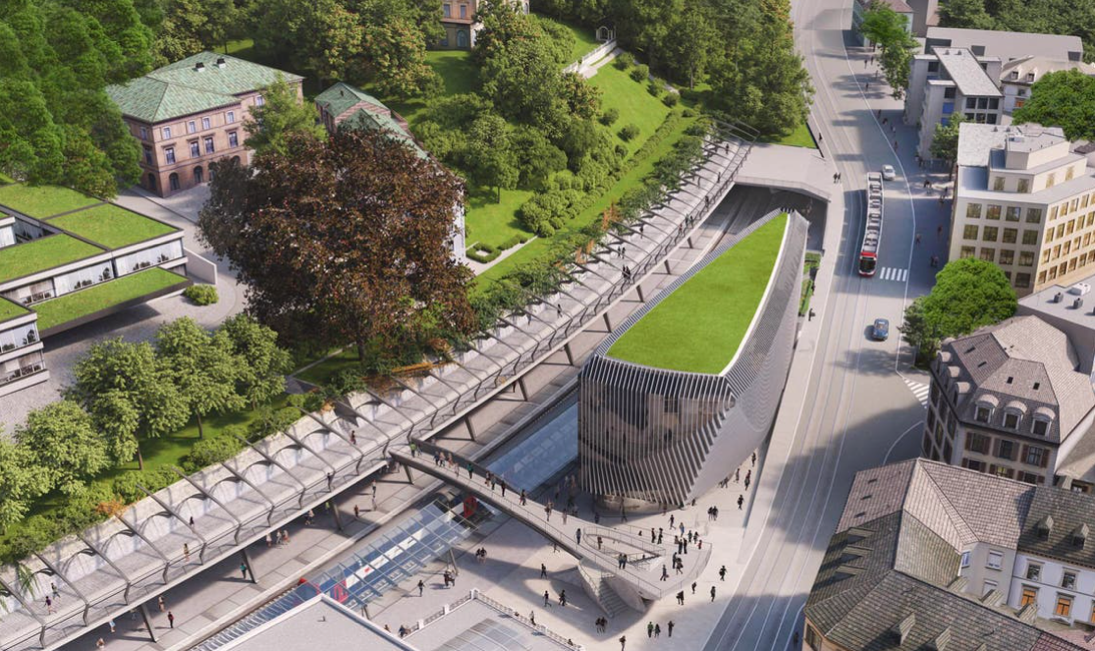 Planned commercial building by Calatrava at Stadelhofen: “ocean-going vessel” or “beached whale”?
Visualization: Calatrava Valls SA

Article in *Die Weltwoche*: Interview with Katerina van der Laan, “The Swiss Are Still Very Good Buyers”
Reading time: 9 min

Davoser Zeitung, Sept. 1, 1926: Ginesta Opens New Office in Davos
Reading time: 2 min

Wellbeing@Work: Ginesta Launches New Program for Employees
Reading time: 5 min
Nadine Suter will become the site manager of Ginesta’s new location in Davos
Reading time: 6 min